
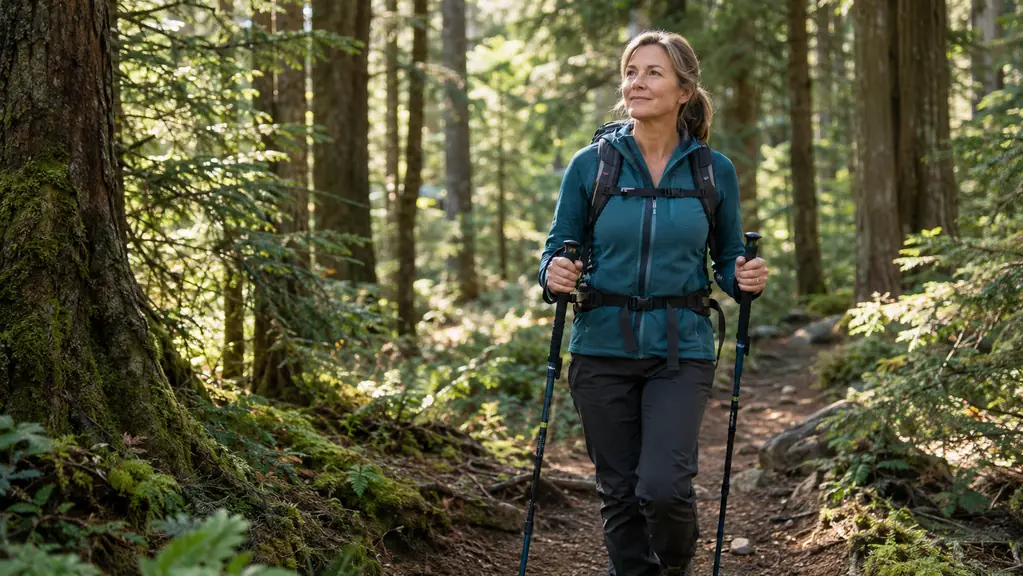
For the last two seasons, the trekking poles I reach for most live in the back of my Subaru Outback, and they are the Cascade Mountain Tech poles with the extended cork grip. I am a 54-year-old former middle-school science teacher with a left knee that has complained since college volleyball, so I do not carry poles for fashion. I carry them because a good pair turns a steep Chuckanut climb into something my knee can actually agree to. When my sister Jen asked whether she should buy the same pair or the Trekology Trek Z poles she kept reading about, I did what I do with any gear question: I took both out on the same trails, in the same weather, in the same week, and I kept notes.
Short version: both are light, cork-gripped, collapsible aluminum poles that cost a fraction of what the big-name brands charge, and both will serve a day hiker well. The difference is in the details that only show up after a few miles. The Cascade Mountain Tech poles feel almost weightless in the hand, the grip extends down the shaft so you can choke up on steep climbs, and the included tip kit covers you when a carbide tip finally wears out. The Trekology Trek Z poles have external lever locks that are easier to adjust and hold more securely under load, which matters if you lean on your poles hard or carry a heavy pack. If you want the lightest, most comfortable pair for day hikes, I would pick the Cascade Mountain Tech poles. If you want locks you can trust without thinking about them, the Trek Z is the honest alternative.
| Cascade Mountain Tech | Trekology Trek Z | |
|---|---|---|
| Weight | Noticeably lighter in the hand on a full day out; easy to forget you are carrying them | A bit more heft, which some hikers read as planted and sturdy |
| Grip | Cork grip with an extended lower section for choking up on steep climbs | Comfortable cork grip at a standard length |
| Locking mechanism | Twist locks: compact and low-profile, but they need a firm hand and can slip under heavy load | External lever locks: quick to adjust and they hold tight when you lean in |
| Included extras | Tip kit with spare carbide tips, baskets, and rubber feet | Basic baskets and tips, nothing spare |
| Best for | Day hikers who want light poles that disappear in the hand | Hikers who want a tough, simple pole that adjusts fast and locks hard |
How I Tested Them
I tested both pairs over three weeks on the trails I know best: the Chuckanut ridges above Bellingham and a longer loop in the North Cascades on a weekend with my sister. I kept the same routine for each pair. Set them to the same length, using the same technique for the same climbs, and wrote down what gave me trouble. I also handed them to Jen without any instructions, because the way a pole behaves for a careful reviewer is not the way it behaves for someone who just wants to walk.
I also paid attention to the boring stuff. How the locks felt at the end of a wet day, whether the grips smelled like a gym bag after a long hike, how easily the sections adjusted when I lent them to a friend who is six inches taller than me. Those are the details that decide whether a pole gets used or gets left in the car, and they are the details that rarely make it into a spec sheet.
Where Cascade Mountain Tech Wins
The first thing I noticed was the weight. On the flat Chuckanut trails the difference is a background detail, but on the climb up to the ridge it becomes the whole story. Lighter poles mean less energy spent lifting and placing them, and for someone with my knee the savings add up over ten miles. The Cascade Mountain Tech poles use aircraft-grade aluminum and still come in light enough that I forget I am holding them, which is exactly what I want from a day-hiking pole.
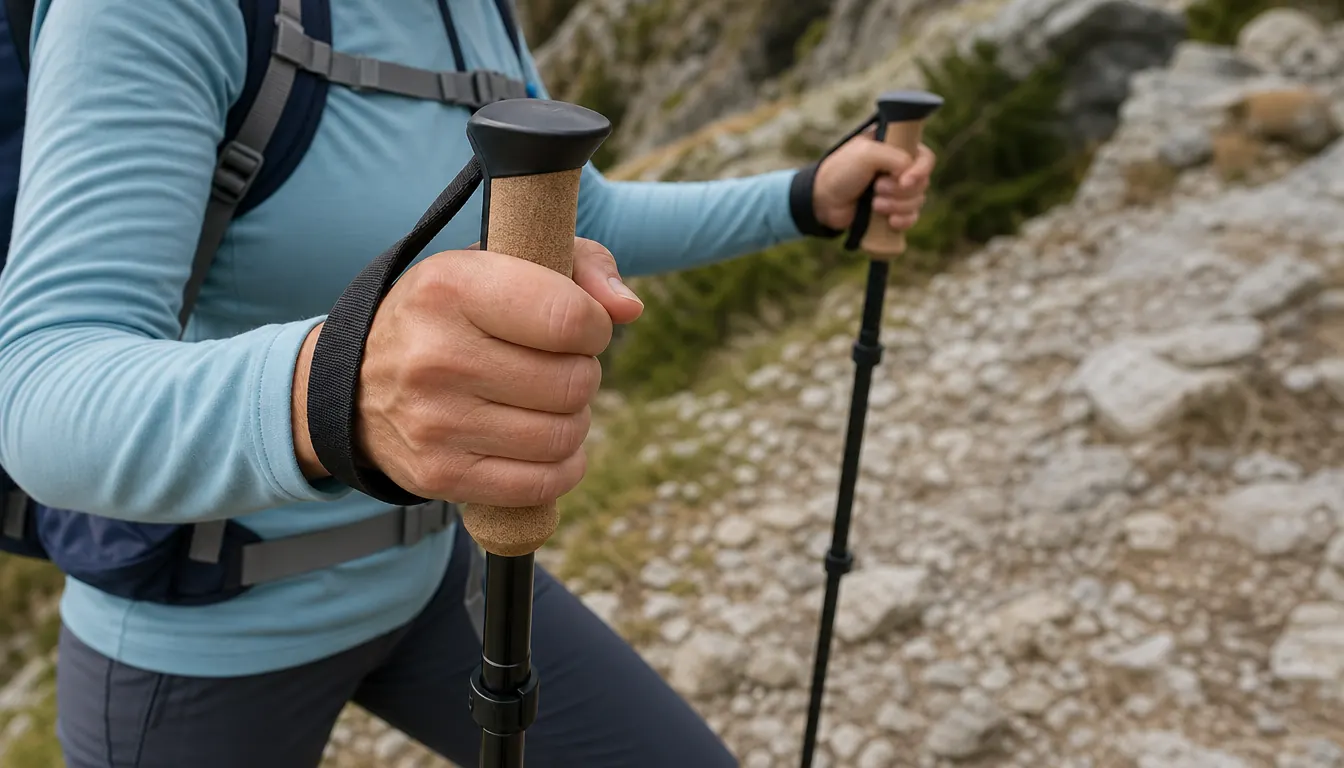
The extended cork grip is the feature I did not expect to care about. On a steep pitch you naturally want to choke up on the pole, and the cork that runs below the handle gives you a place to put your hand without sliding down onto bare aluminum. Cork also gets grippier as your hands sweat, which is the opposite of foam. And the tip kit means that when I finally wore a carbide tip down to a nub on a rocky descent, I had a spare in the bag instead of a reason to order a new pole.
The Cascade Mountain Tech poles also feel better in the hand on a hot day. Cork breathes in a way that foam and rubber do not, and after a long afternoon my palms were not slick. I noticed this most on the descent, when I was gripping tighter than usual and relying on the pole to take weight off my left knee. A handle you do not have to fight is a handle that lets you watch the trail instead of your hands.
Where Trekology Trek Z Wins
I want to be fair here, because the Trek Z has one clear advantage, and it is the one that matters most to a certain kind of hiker. The external lever locks are simply easier to use. You flip the lever, slide the section, and snap it shut, and when it closes it stays closed. My sister Jen, who is not patient with finicky gear, adjusted the Trek Z poles in about five seconds at the trailhead. The twist locks on the Cascade Mountain Tech poles work, but they need a firm grip and a full turn, and if you are carrying a loaded pack and leaning hard, a twist lock can slowly work loose.
The Trek Z also feels more substantial when you put your weight on it. There is a solidity to the thicker shaft and the lever lock that inspires confidence on steep, loose descents. If you are the kind of hiker who really leans on your poles, or you carry a heavier pack on multi-day trips, that extra confidence is worth the small weight penalty. It is the difference between a pole you hold and a pole you trust.
One more thing in the Trek Z column: the locks are easier to fix on the trail. If a lever lock loosens, you can usually tighten the screw with a small tool or just reset the cam. A twist lock that has lost its grip is harder to diagnose in the field, especially with cold hands. For a weekend backpacker who is miles from the car when something goes wrong, that simplicity is a real advantage.
Twist Locks vs Lever Locks, Six Months In
Locking mechanism is where these two poles differ most, so it deserves its own section. A twist lock works by friction: you turn the collar, the segments bind, and the pole holds its length. It is compact, it is light, and it has no moving parts to break. The trade-off is that friction needs a firm, even turn, and a twist lock can slip when it is cold, wet, or loaded. I learned to check mine at the top of every climb, the way you check a bootlace.
A lever lock is a different animal. The cam clamps down on the shaft with mechanical leverage, which means it holds harder as you put more weight on it. That is why the Trek Z locks feel so planted on the descent. The cost is a little weight and a little bulk at the joint. For a day hiker who wants the lightest possible pole, the twist lock is the right trade. For a hiker who wants to set the length once and never think about it again, the lever lock wins.
The Trek Z adjusted in about five seconds at the trailhead. The twist locks on the Cascade Mountain Tech poles need a firm hand and a full turn.
The pair I keep reaching for on a weekday morning
Light, comfortable, and covered by a tip kit when the carbide finally wears down. If you are a day hiker who wants poles you barely notice, this is the pair.
Amazon Check Today's Price on Amazon →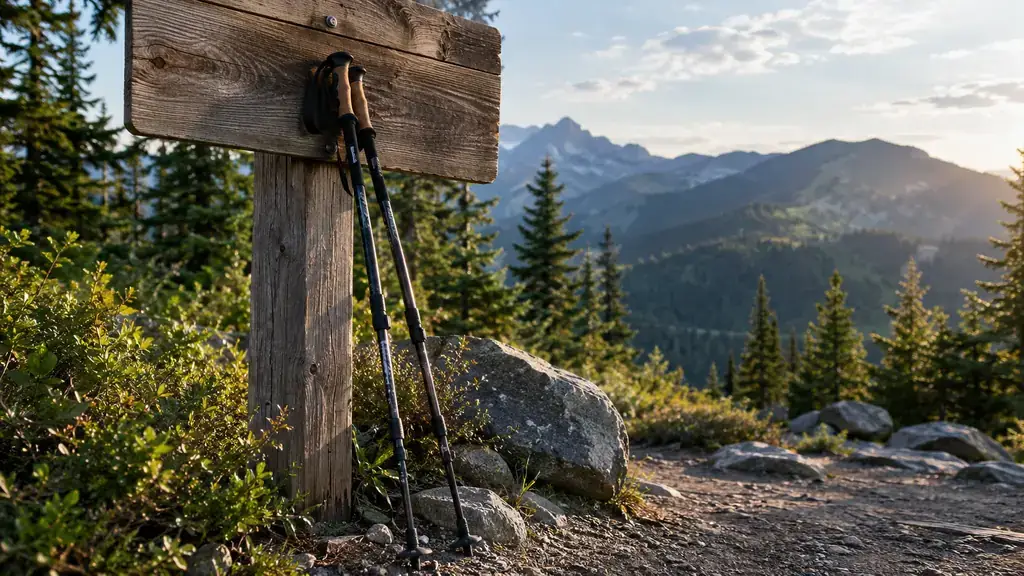
Who Should Buy Which
If you are a day hiker who wants poles you barely notice, buy the Cascade Mountain Tech poles. They are the ones I reach for on a weekday morning when I just want to get up the trail without thinking about my gear. The weight, the extended grip, and the spare tips all point in the same direction: a light, comfortable pole for the kind of hiking most of us actually do, on trails like the ones around Bellingham where the climbs are short but relentless.
If you are a backpacker, or a hiker who leans hard on your poles, or someone who hates fighting with a twist lock at the trailhead, the Trekology Trek Z is the better buy. The external locks adjust faster, hold tighter, and feel more solid under load. It is the right tool for a different job, and I would not argue with anyone who chooses it. I would just want them to choose it for the right reason.
What Both Poles Get Right
Before I wrap this up, I want to give both pairs their due. They share the basics that matter: cork grips that get tackier as you sweat, collapsible sections that pack into a daypack, and aluminum shafts that shrug off the kind of abuse a trail dishes out. Neither pole has given me a reason to complain on the trail, and both have earned a place in the conversation when friends ask what to buy.
What neither pair is, is a substitute for good judgment on the trail. A pole is a tool, not a talisman. It transfers load off your knees, gives you a third point of contact on a slippery log crossing, and saves your balance on the way down. But the right tool still depends on the job, which is why I tested both before I told Jen which one to buy. She bought the Cascade Mountain Tech poles, by the way, and she has not mentioned the Trek Z since.
What I'd Tell a Friend at the Trailhead
If we were standing at the parking lot with both pairs in the back of my Subaru, here is what I would actually say. For the hiking most of us do, the Cascade Mountain Tech poles are the better everyday choice. They are light enough to forget, the grip does exactly what it is supposed to do on a climb, and the tip kit means the poles will still be going strong when cheaper setups have worn their tips flat.
But I would also tell them to be honest about how they hike. If they lean on their poles the way I lean on mine after a long day, or if they pack for multi-day trips, the Trek Z is the smarter buy. The lever locks will not let them down, and the extra ounces are a fair trade for that certainty. The worst thing you can do is buy the lightest pole and then not trust it when you need it most.
The pair that lives in the back of my Subaru
Light, comfortable, and ready when you are. Check today's price for the Cascade Mountain Tech poles on Amazon and see if they fit your next hike.
Amazon Check Today's Price on Amazon →