
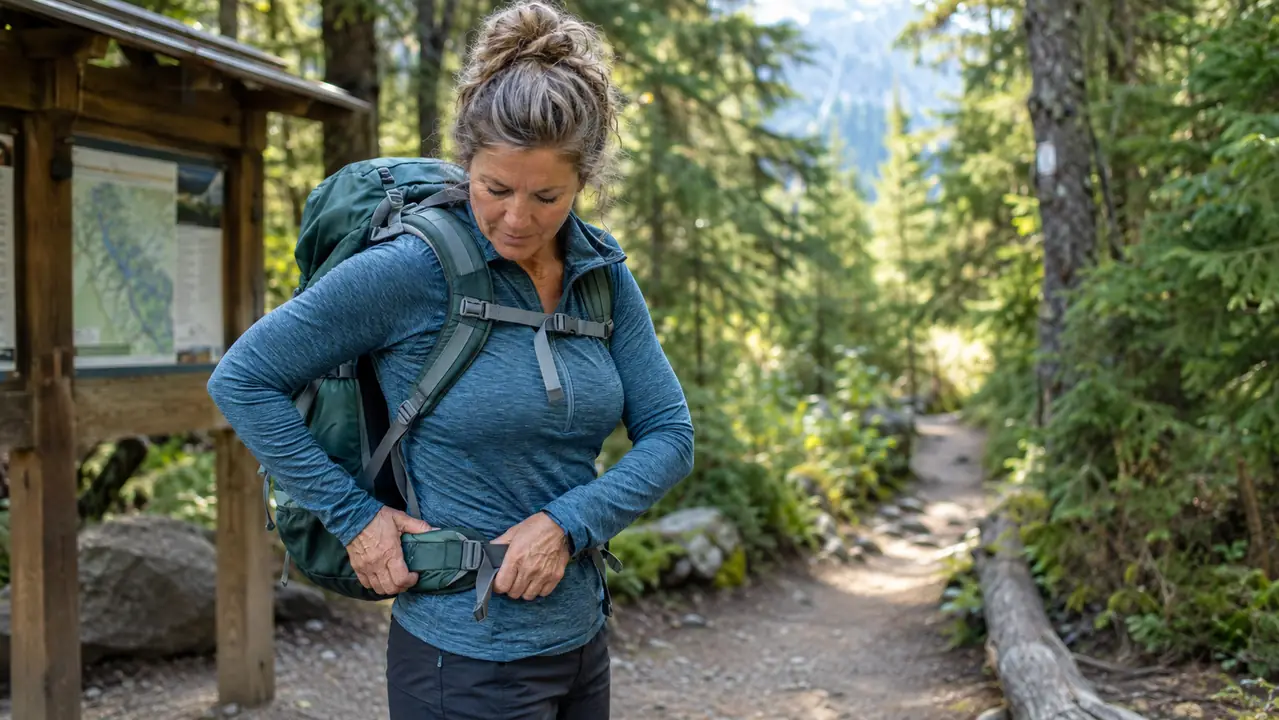
Three months into using the SKYSPER 30L daypack, I stopped reaching for my old pack without thinking about it. That is the quiet test of any gear: not how it feels on day one, but whether you grab it by default when the trailhead is forty minutes away and the sky could do anything. The SKYSPER passed that test, and it surprised me.
I am Tessa, a retired middle-school science teacher who hikes the North Cascades and the Chuckanut trails near Bellingham most weeks. I have an old left-knee injury from college volleyball, so I care about how a pack transfers weight, not just how many pockets it has. After months of weekday solo hikes and weekend trips with my sister Jen, here is the honest review I wish I had read before buying my own.
The Quick Verdict
A comfortable 30L daypack with a hip belt that actually carries load and organization that makes sense on the trail. It is not ultralight and it is not expedition-grade, but for most day hikes and weekend trips it gets out of your way and stays out of it.
Amazon Check Today's Price →The daypack that made me retire my old one
After months of trail use, the SKYSPER 30L keeps earning its spot in my car. If you want a daypack that carries its weight and keeps its shape, this is the one to start with.
Amazon Check Today's Price on Amazon →How I've Used It
I bought the 30L version in early spring and have used it on roughly forty hikes since: solo weekday mornings on the Chuckanut trails, weekend loops with Jen, and one five-day trip to the North Cascades where it served as my carry-on and my daypack. It has been rained on, dropped on granite, stuffed into overhead bins, and once sat in the trunk of my Subaru Outback for a week with a half-eaten granola bar in the front pocket.
My routine is the same most weeks. I load it the night before: two liters of water in the main compartment, a puffy jacket, a first aid kit, lunch, and a camera. The pack carries all of it without the shoulder strain I used to accept as normal. My left knee still dictates my pace, but the hip belt takes enough weight off my shoulders that I can hike longer before I need a break.
I have also used it as a carry-on for a flight to see family, which is where the clamshell opening and the laptop sleeve earn their keep. It is not a huge pack, but it is organized, and organization is what keeps me from unpacking everything to find a headlamp.
Packing it for travel taught me something else. Because the main compartment unzips almost all the way around, I could lay it flat on the airport security belt and pull my small electronics pouch out without unloading the rest. Folded into my checked bag on the way home, it took up about the space of a paperback novel, which is a small thing until you are trying to fit a second pack into luggage that is already full. For anyone who likes to hike when they travel, that packability is a quiet reason to choose the SKYSPER over a stiffer framed daypack that cannot be squashed.
On weekends, Jen and I trade the pack back and forth to see how it rides on different frames. She is a few inches taller than me, and the torso length works for both of us without a lot of fiddling. That is not true of every pack in this class, and it is part of why I stopped treating it as a budget experiment and started treating it as my main pack.
Why 30 Liters Is the Right Size for Most Day Hikes
Thirty liters sits in a useful middle ground. A 20L pack forces you to choose between the puffy jacket and the camera. A 40L pack tempts you to carry things you do not need and punishes you on the uphill. The SKYSPER 30L holds a full day of supplies with room to spare, and it compresses down when you do not need the space.
The main compartment opens wide, which matters more than people expect. I can see everything at once instead of fishing through a dark tube. There is a padded sleeve that fits a 15-inch laptop, which I use on the flight home, and a small inner pocket where I keep my keys and a headlamp.
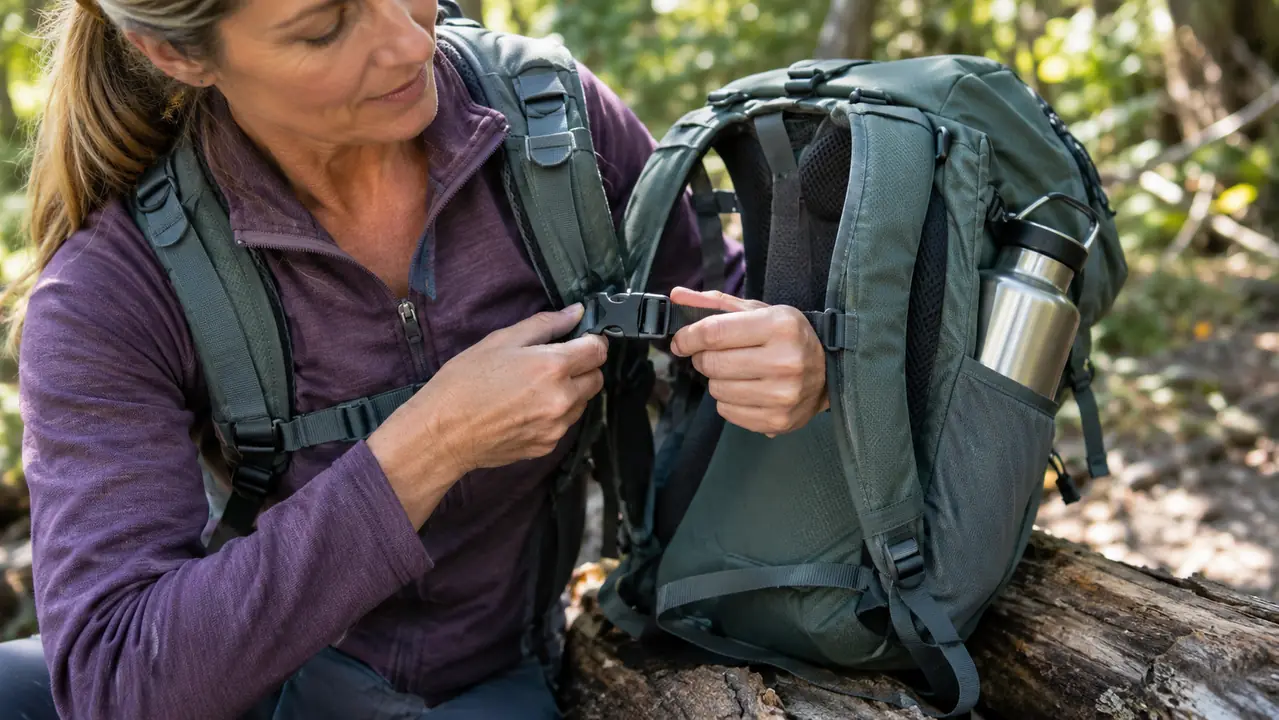
On the outside, there are two side pockets that hold standard water bottles snugly. I have never had a bottle fall out, even when I bent over to tie my boots. The front pocket holds a light rain jacket or a map, and the daisy chain on the front gives me a place to clip a carabiner for my hat or a wet buff.
There are compression straps on both sides that pull the pack down to a slimmer profile when it is half empty. I use them on the way home from a trip, when the puffy jacket has been worn instead of packed, and the pack stops feeling like a suitcase and starts feeling like a daypack again.
The Hip Belt Is the Whole Story for Me
Here is where I get specific, because this is the reason I kept this pack. My left knee was injured playing volleyball in college, and after a few hours of hiking it complains. A pack that puts most of its weight on my shoulders makes that worse, because I tense up and change my gait. The SKYSPER has a padded hip belt that transfers a meaningful share of the load to my hips, and that changes how my knee feels at mile six.
The hip belt is not a thin strap that slides around. It is wide enough to stay put, with padding that does not dig in. The sternum strap clips across my chest and stops the shoulder straps from sliding outward. I adjust all of it in about thirty seconds at the trailhead, and then I do not think about it again until I take the pack off.
Is it as good as a fitted pack from a specialty shop? No. The hip belt is not load-bearing in the way a multi-day pack's belt is, and the frame is not a true internal frame. But for a 30L daypack, the load transfer is much better than I expected, and it is the difference between a comfortable eight miles and a miserable four.
Fabric, Zippers, and a Week of Rain
The fabric is a coated nylon that has handled everything I have thrown at it. I have hiked through drizzle, sat on wet logs, and brushed against alder branches on narrow Chuckanut trails. Water beads up and rolls off the main fabric. The zippers are the detail I watch on any pack, because they are the first thing to fail on cheap gear. After months of use, they still run smooth, and the main zipper has never snagged.
One honest note: the pack is not waterproof. The coating sheds light rain, but a downpour will find its way in through the zippers over time. I use a pack liner on days when the forecast is genuinely wet, and that has been enough. If you hike in constant heavy rain, you will want a dedicated rain cover regardless of which pack you buy.
The stitching has held up well. I checked the stress points after the first month, the shoulder strap attachments, the hip belt connection, the daisy chain, and I have not found a loose thread. The foam in the back panel has kept its shape, which is the thing I expected to go soft first.
The worst test so far came on a gray Saturday in May on the Oyster Dome trail. It drizzled for the first hour, then rained hard on the way down, and I had the pack loaded with a fleece, a rain shell, lunch, a first aid kit and two full liters of water. At the trailhead I unpacked everything onto the tailgate of my Outback and checked each item. The fleece in the main compartment was dry. The map in the top pocket had one damp corner. The bottom seam, which is where cheaper packs usually let water wick in, was fine. Since then I keep a trash compactor bag as a liner on any day the forecast looks doubtful, and the combination has kept my spare layers dry every time.
The back panel has a channel down the middle that helps a little with airflow, and the padding is firm without feeling like a board. I have carried it for eight hours straight on a long ridge walk, and I never felt the need to stop and adjust the straps, which is about the highest compliment I can give a pack.
What Wears Down After Months of Use
No review is honest without the part where I tell you what is not perfect. The shoulder straps are comfortable but lightly padded, so a very heavy load will eventually make itself known. I keep my total pack weight under fifteen pounds and it is fine. If you tend to carry ten pounds of camera gear plus everything else, you may want more padding.
The sternum strap is not adjustable for height. It sits at a fixed position that works for my 5-foot-6 frame, and my sister Jen, who is taller, finds it slightly high. It is still usable, but it is the kind of detail a higher-end pack gets right with a sliding rail.
The back panel is breathable but not ventilated. On hot August afternoons, my back gets sweaty where the pack sits. This is normal for a pack in this class, and it does not bother me enough to change my choice, but I would be overselling it if I said otherwise.
One thing I will note about the hip belt padding: it has softened slightly after months of use, which is normal and actually makes it more comfortable. The belt still holds its position and still transfers load. I mention it because 'softened' sounds like a problem, and in this case it is just the padding settling in.
Alternatives I Considered
Before I settled on the SKYSPER, I compared it with the Osprey Daylite, which is the pack I see most often on local trails. The Daylite is lighter and has a better-known name, and its warranty is genuinely excellent. But it is smaller at 20 liters, and the hip belt on the standard version is minimal. For my knee, the load transfer on the SKYSPER made the difference.
I also looked at larger 40L packs from other brands, but they were more pack than I needed for day hikes, and the extra capacity just encouraged me to carry more. The 30L size is the one I actually reach for, and after months of use, I have not once wished it were bigger or smaller.
I have not tested every 30L pack on the market, and I want to be clear about that. I am telling you which packs I actually compared and why I chose this one, not pretending I have a laboratory. What I have is months of trail time, a knee that punishes bad load transfer, and a sister who is happy to tell me when I am wrong about a piece of gear.
What I Liked
- Padded hip belt actually transfers weight to your hips, which matters for anyone with back or knee trouble
- Wide-opening main compartment makes packing and finding things easy
- Side pockets hold standard water bottles securely, even when you bend over
- Coated fabric sheds light rain and has held up through months of use
- 30L size is the sweet spot for day hikes and weekend carry-on
Where It Falls Short
- Not waterproof in a downpour; use a pack liner or rain cover
- Sternum strap is not height-adjustable
- Shoulder straps are lightly padded for heavier loads
- Back panel gets warm on hot days
The hip belt is the difference between a comfortable eight miles and a miserable four, and that is why I stopped reaching for my old pack.
Who This Is For
Buy the SKYSPER 30L if you are a day hiker who wants a pack that carries its weight and keeps its shape. It is a great fit for weekend hikers, travelers who want one bag for the flight and the trail, and anyone whose back or knees appreciate a real hip belt. It is also a sensible first pack for someone new to hiking, because it is forgiving and easy to organize.
If you are between sizes or unsure whether 30 liters is too much pack, I would err on the side of this size over a smaller one, because the compression straps mean it never feels oversized when it is only half full. That flexibility is why it has become the pack I grab for everything from a two-hour loop to a full day above treeline.
Who Should Skip It
Skip it if you are a thru-hiker who counts every ounce, if you regularly carry more than about fifteen pounds, or if you hike in constant heavy rain without a pack liner. If you need a true internal frame for multi-day loads, or a ventilated back panel for desert heat, this is not that pack. The Osprey Daylite is the better pick if you want a lighter, smaller pack and do not need the load transfer.
If you already own a pack you like and you are only browsing, this review will still be here. But if the pack you own puts your shoulders through a bad day every time you take it out, that is a fixable problem, and a real hip belt is usually the fix.
Still deciding? This is the pack I reach for every week.
After months of trail use, the SKYSPER 30L has earned its place in my trunk. If it fits your kind of hiking, it will probably earn its place in yours.
Amazon Check Today's Price on Amazon →