
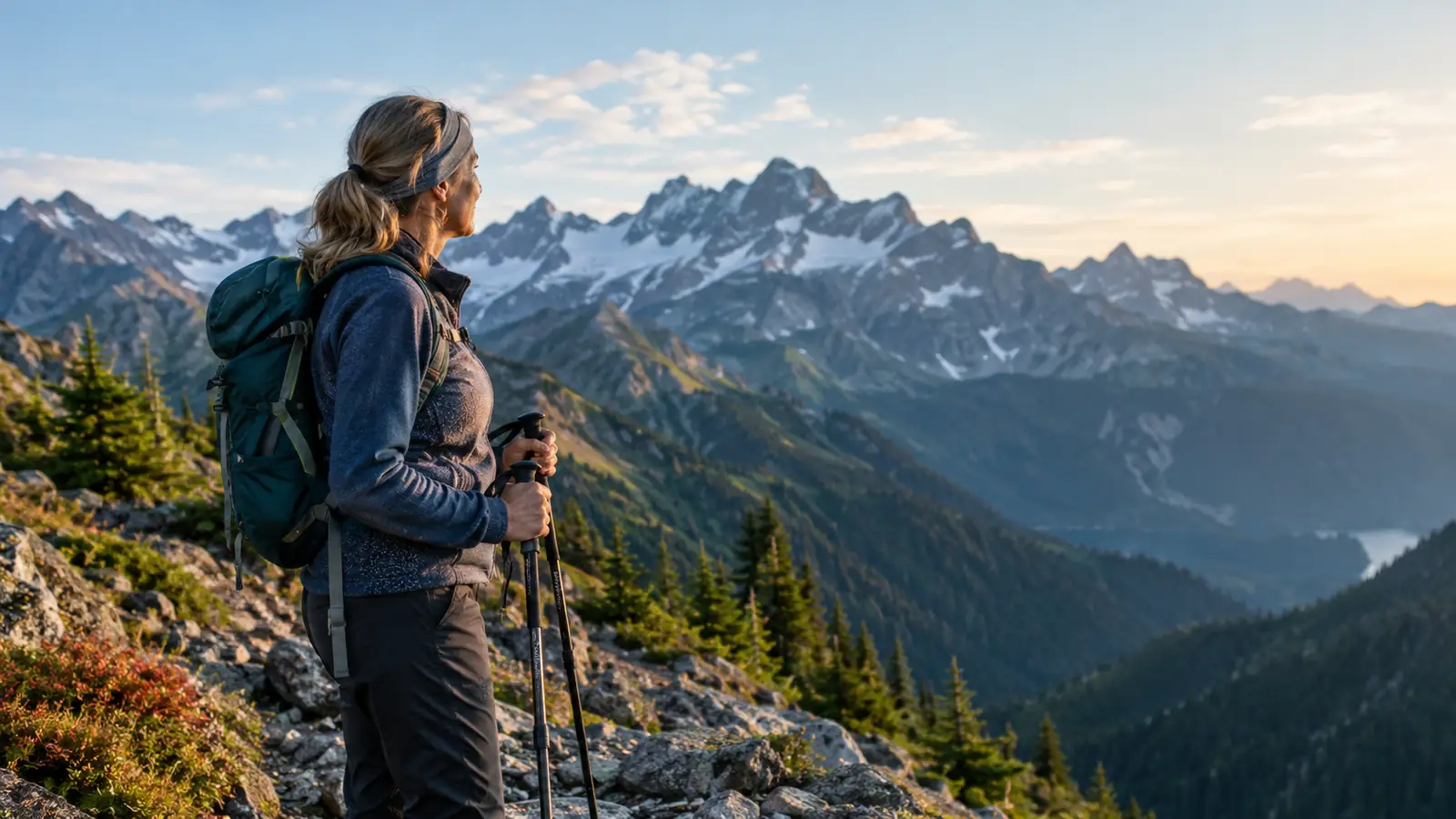
I did not start using trekking poles because I wanted to look like a serious mountaineer. I started because my left knee, which I wrecked in college volleyball back in 1989 when I came down wrong on a teammate's foot, started complaining on every downhill mile. By the time I reached my fifties, a six-mile hike meant a two-day recovery. I tried the usual fixes first: a compression sleeve, a pair of stiff hiking boots, ibuprofen before the trailhead, and just walking slower on the descents. The sleeve rolled down by mile two. The boots helped my ankles and did nothing for my knees. The ibuprofen wore off exactly when the downhills started. The moment I gave in was on the way down from Oyster Dome in early April, a hike Jen had talked me into. The trail drops about 1,200 feet in the last mile and a half, and by the time I reached the car I was gripping the door handle and wondering how I would manage the 40-minute drive home. Jen suggested I try a pair of Cascade Mountain Tech poles, and I told her they would just be extra things to carry. She was right and I was wrong, and after a season of hiking the North Cascades with them, I am not going back.
If you are on the fence about whether trekking poles are worth the weight in your hands, here are ten reasons, in the order I discovered them, that convinced me to keep them in my Subaru Outback at all times.
The poles that got me off the couch and back on the trail
Cascade Mountain Tech poles have been on every hike I've taken since I gave in and tried them. Light enough to forget, sturdy enough to trust on a rocky descent.
Amazon Check Today's Price on Amazon →Downhills stop being the worst part of the hike
Every step downhill sends force through your knees. On a steep descent, that is your body weight multiplied several times over, landing on the same joint with every stride. With poles, some of that force goes through your arms instead. The first time I tested this properly was on a 7.4-mile loop near Baker Lake in June. The return leg dropped about 1,600 feet over two miles of switchbacks, the kind of section that used to have me bracing on every step. I planted the poles two steps ahead of me on the way down, let my arms take some of the load, and kept a rhythm instead of stopping every few minutes to let the ache settle. My knee still knew I had hiked, but it did not swell up on the drive home, and I did not spend the evening with an ice pack on the couch. That alone was reason enough for me.
You gain four points of contact instead of two
On wet roots, loose scree, and snowmelt streams, two extra points of contact are the difference between staying upright and testing how well your rain jacket works. I have caught myself more times than I can count with a quick plant of a pole.
Your arms get a workout, not just your legs
Hiking with poles uses your shoulders, triceps, and core in a way that plain walking never does. After a season of it, I noticed my upper body felt stronger without a single extra gym session.
They double as a balance aid on stream crossings
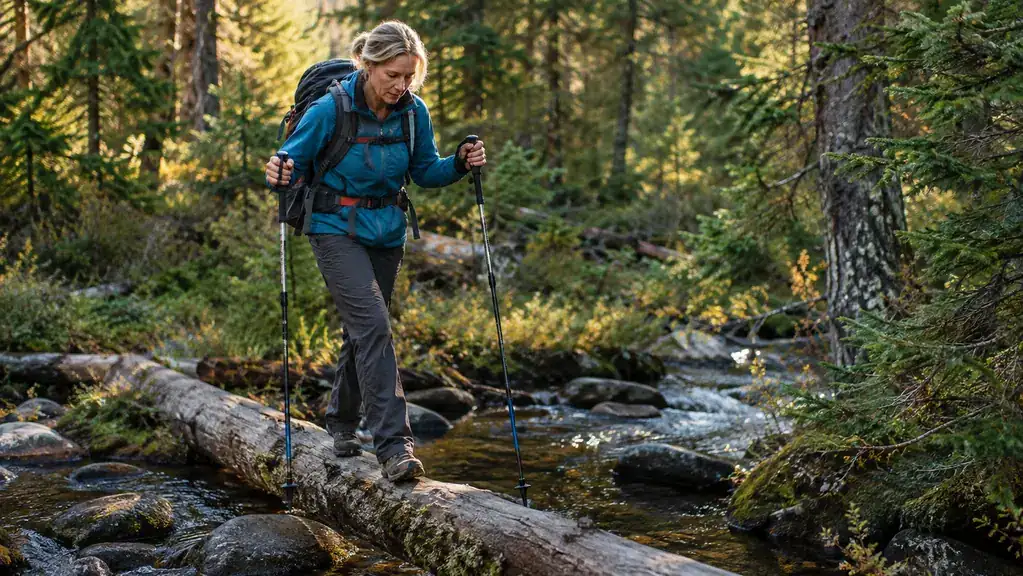
There is a log crossing on one of my regular Chuckanut trails that used to make me stop and think. It is a single cedar log about 14 inches wide, spanning a creek that runs fast in the spring, and the bark is slick after rain. Before poles, I crossed it by sitting down and scooting, which worked but felt ridiculous and left my hands muddy. On a wet morning last May, I watched a woman maybe ten years older than me walk straight across with a pole in each hand, and I decided that was the version I wanted to be. Now I plant both poles on the log ahead of me, take a breath, and walk across like it is a sidewalk. The poles do not remove the risk. If the log were rotten or the water were high, I would find another route. But they turn a wobble into a choice, and that makes the crossing feel manageable.
Your pace settles into something sustainable
Poles give you a rhythm. Instead of surging up a hill and gasping at the top, I found myself stepping into a steady cadence that carried me farther without the usual mid-afternoon crash.
They clear the trail in front of you
Cobwebs, tall ferns, and the occasional branch stop being a face-level problem when you can brush them aside with a pole. It sounds small until you have walked a wet morning trail without eating a single web.
You can test a stream before you commit to crossing it
A pole lets you check depth and find the firm line before you put your weight down. On the rocky creeks around the North Cascades, that little bit of information saves a lot of wet socks.
They turn a tarp or tent into a quick shelter
In a pinch, a pair of poles becomes the ridge line for a tarp, a prop for a rain fly, or a way to create shade on a treeless lunch spot. I have used mine for all three.
They give tired legs a little help on the way up
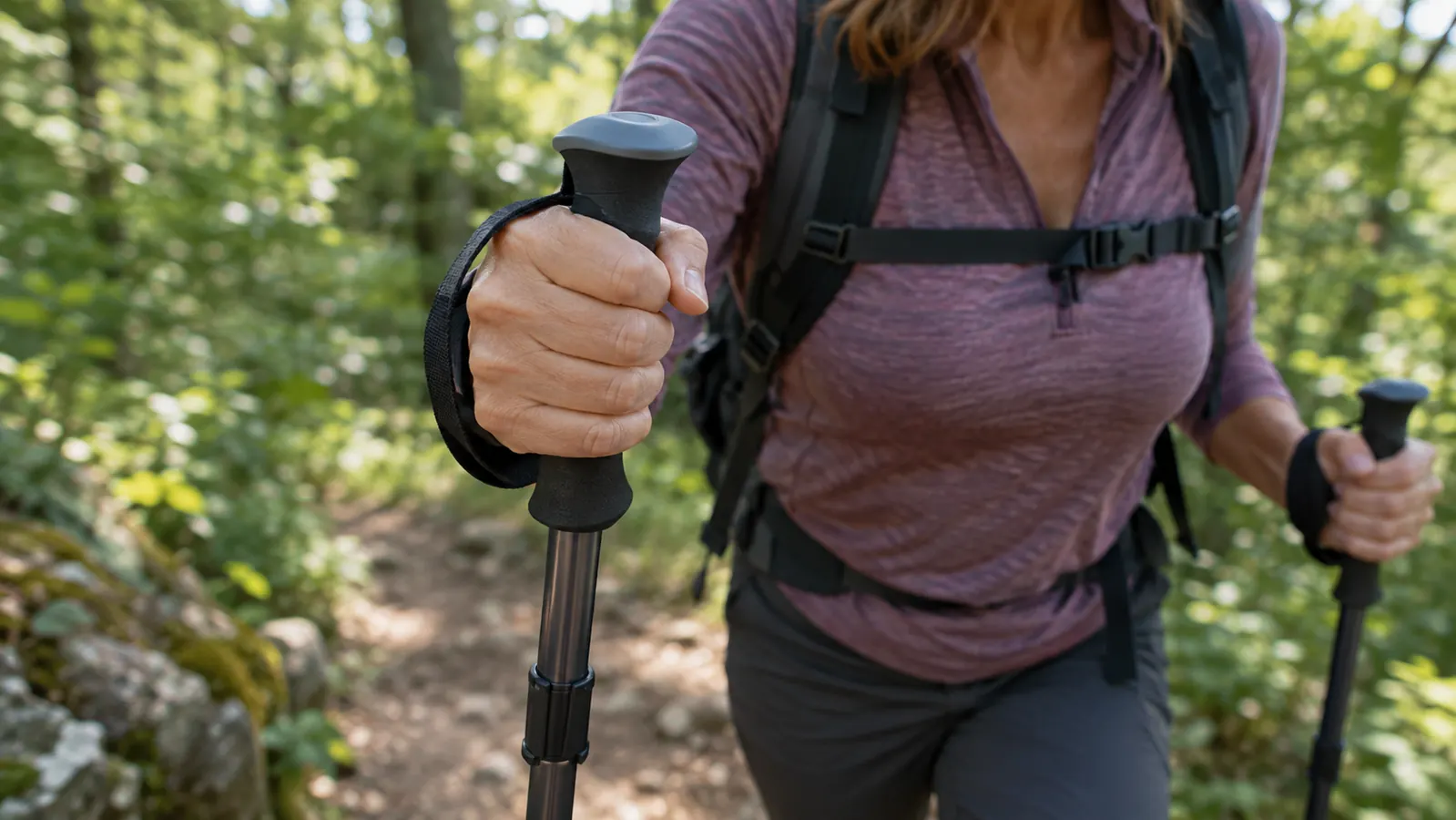
Poles are not just for downhills. On steep climbs, I pull myself up with my arms, which gives my legs a break and keeps my heart rate from spiking quite so fast. The extended grip on the Cascade Mountain Tech poles lets me choke up high on the steep pitches without my hand slipping, which is exactly what you want when you are pulling yourself up a wall of switchbacks. The climb that sold my sister Jen was the south side of Lookout Mountain, a route that gains about 2,300 feet in three miles, most of it in the last mile of switchbacks. She had been ahead of me all morning, the way she always is, but on that push she slowed down and asked to borrow one of my poles for a few minutes. She gave it back at the top, said it felt like having a handrail on a staircase, and ordered her own pair that same evening. Now we both carry them, and she no longer waits for me at the top quite so impatiently, which I count as a win for sisterly relations.
They make you look like you know what you're doing
This one is purely cosmetic, but it is real. There is a quiet confidence that comes from planting a pole and stepping forward with intent. You stop being a person trudging up a hill and start being a person who hikes.
What I'd Skip
If you only hike on flat, smooth, well-groomed trails and you never go more than a mile or two, trekking poles are an extra thing to carry and you will probably leave them in the car. A neighbor of mine walks the paved path around Lake Padden every morning and has no use for them, and I would not try to convince her otherwise. Buy them when you start seeking out elevation, uneven ground, or longer days. That is the honest line, and it is the same line I would give a friend.
My knee still knows I hiked, but it no longer swells up on the drive home. That alone was reason enough.
Start your next hike with a little more support
Cascade Mountain Tech poles are the ones I keep reaching for, hike after hike. If your knees are telling you the same thing mine were, it might be time to listen.
Amazon Check Today's Price on Amazon →