
The first time I used Cascade Mountain Tech trekking poles, I was 54 years old, hiking the Chuckanut Ridge Trail with my sister Jen, and about half a mile from the car I realized my left knee had stopped complaining. That may not sound like much. But for someone with an old volleyball injury that has nagged her for thirty years, a knee that quietly behaves on a downhill is about as close to a win as I get on a trail. And it didn't happen by accident.
I'll back up. I'm Tessa Marlow, a retired middle-school science teacher who lives in Bellingham, Washington. I hike the North Cascades and the Chuckanut trails close to home, usually alone on weekdays and with my sister Jen on weekends. I drive a used Subaru Outback to trailheads, I own one cat named Pepper who stays home, and I have a left knee that has been my hiking nemesis since college volleyball. For years I managed it the way a lot of people do: I avoided the steepest descents, took ibuprofen before long hikes, and told myself the ache was just part of getting older.
Then last spring, Jen and I planned a weekend trip to the Enchantments. I was excited, and also worried. The elevation gain didn't bother me. What bothered me was the 4,000-foot descent on the way out, the kind of downhill that turns my knee into a grinding, swelling reminder that I'm not twenty anymore. I mentioned this to a friend who works at the local REI, and she said something I didn't expect: 'Tessa, you're a science teacher. You know levers. Why are you letting your knee take the whole load?'
That was the moment I stopped thinking of trekking poles as equipment for old people or serious mountaineers, and started thinking of them as what they actually are: a way to redistribute force. When you walk downhill, your knee absorbs a force roughly three to four times your body weight with every step. A pair of poles can shift a meaningful portion of that load to your arms and core. It's not magic. It's physics. And the first time I used Cascade Mountain Tech trekking poles, I felt the difference within the first mile.
When you walk downhill, your knee absorbs a force roughly three to four times your body weight with every step. A pair of poles can shift a meaningful portion of that load to your arms and core.
Give your knees the help they deserve on your next hike
Cascade Mountain Tech trekking poles are lightweight, adjustable, and ready for the trail. See today's price on Amazon and find out why so many weekend hikers swear by them.
Amazon Check Today's Price on Amazon →Now, I'm not going to tell you that a pair of poles fixed my knee, because that would be a lie. The knee still lets me know when I've overdone it. But the difference between hiking with poles and hiking without them is the difference between finishing a trail and finishing it with something left in the tank. On that first trip to the Enchantments, I came down the switchbacks with my poles planted firmly ahead of me, my arms doing a surprising amount of the work, and by the time we reached the car, my knee was tired, not throbbing. Jen, who is six years younger and has no knee problems, asked to try them for the last mile. She handed them back with a look that said she was already planning her own purchase.
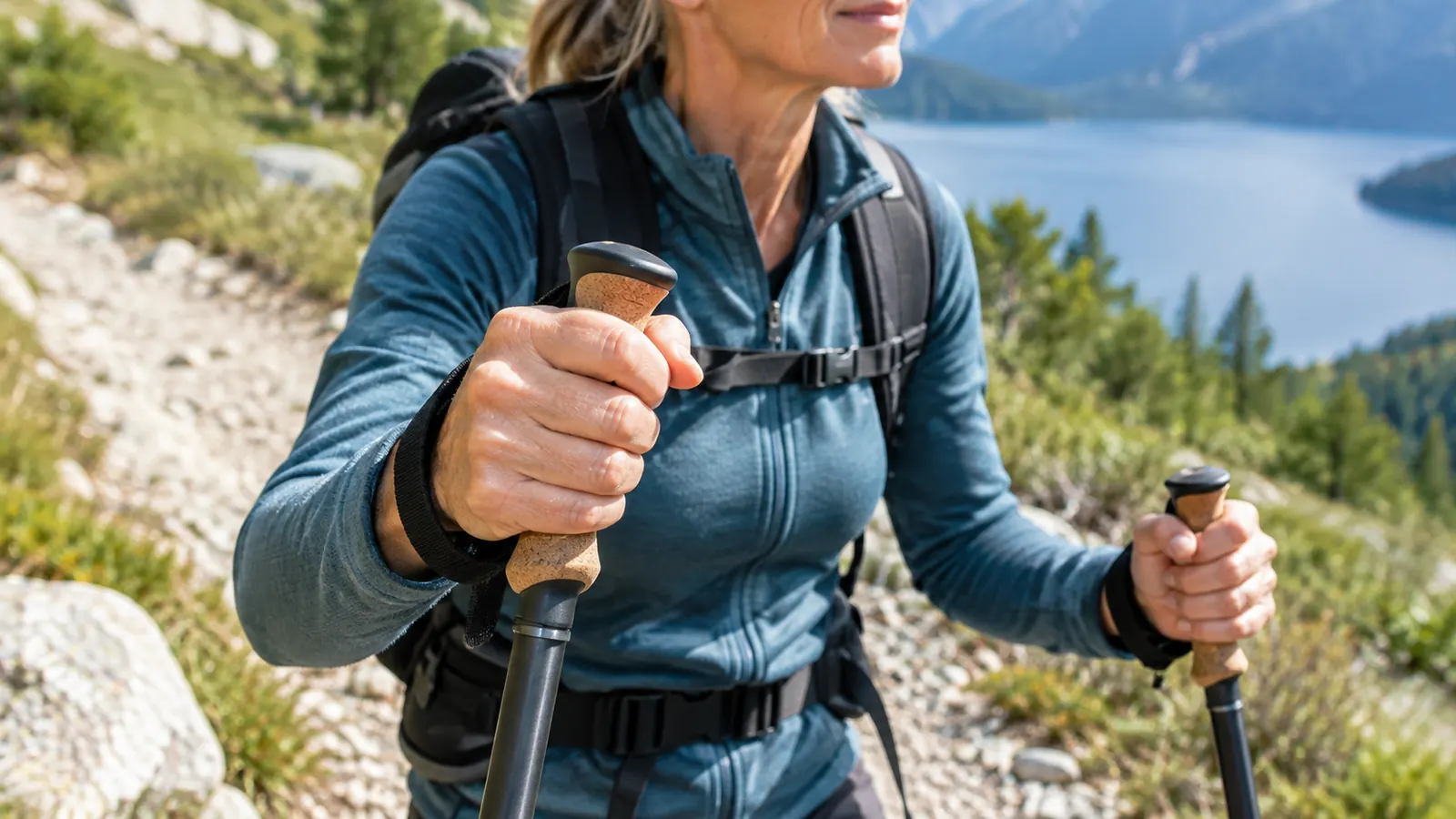
What surprised me most was how easy they were to use. I had assumed trekking poles required some kind of technique, maybe a lesson or at least a YouTube tutorial. But Cascade Mountain Tech poles are about as complicated as a good pair of scissors. They telescope to your height with a simple twist lock, they have cork grips that fit your hand like they were molded for it, and they come with a tip kit that includes rubber feet for pavement and carbide tips for dirt. I set them to the height the chart on the package suggested, stepped onto the trail, and within ten minutes I was swinging them naturally, as if I'd been hiking with poles my whole life.
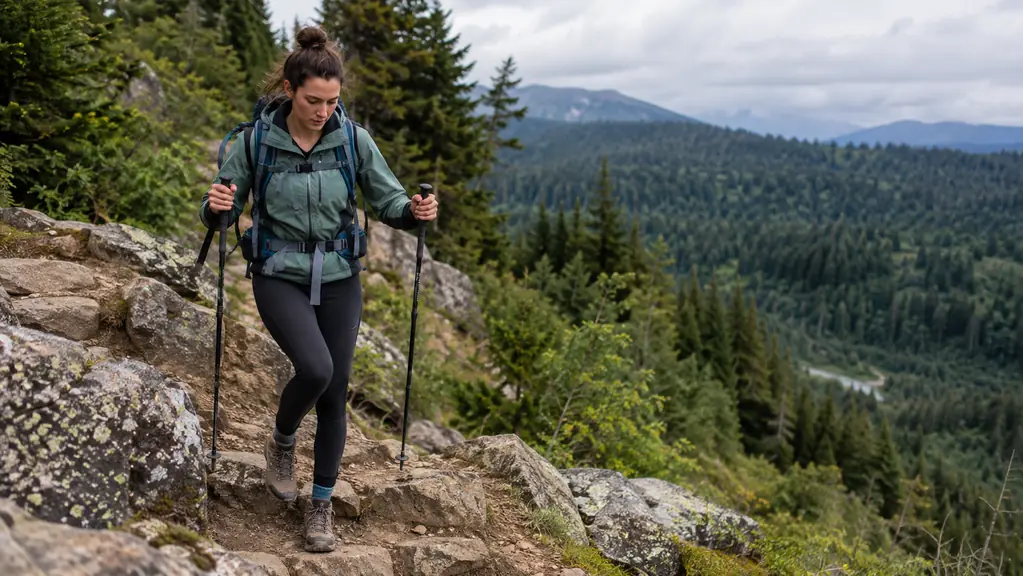
The other thing I noticed, and this is the part I didn't expect, is how much they helped my balance. I'm not clumsy, but I've had my share of near-misses on wet roots and loose scree. With poles, those near-misses became non-events. A pole planted on the uphill side of a slippery root turns a potential ankle twist into a momentary wobble. On the steep, rocky sections of the North Cascades, where a misstep can mean a long slide, I found myself moving with a confidence I hadn't felt in years. It's not just about the knee. It's about the whole system.
Now, a word of honesty, because I promised myself I'd never write one of those reviews that makes a product sound like the answer to every problem. Cascade Mountain Tech trekking poles are not the lightest poles on the market, and they're not the most expensive. They are, in my opinion, the best balance of price, durability, and comfort for a weekend hiker like me. The aluminum shafts are sturdy without feeling heavy, the twist locks have never slipped on me, and after several months of regular use, including a few trips where they got tossed in the back of my Subaru with the rest of my gear, they still look and perform like new. The extended grip means I can choke up on the pole for steep sections without stopping to adjust the length, which is a small thing that turns out to matter a lot on a long descent. I've read reviews from people who use them on much longer thru-hikes, and they seem to hold up fine. For my purposes, they've been more than enough.
I also want to be clear about what they won't do. They won't make a 10-mile hike feel like a 2-mile walk. They won't fix a knee that needs surgery. And they won't turn you into a mountain athlete overnight. What they will do is make the hikes you already love a little easier, a little safer, and a lot more comfortable. And for someone like me, who plans to keep hiking well into her seventies, that's a pretty good deal.
What I'd Tell You If We Were Sitting at My Kitchen Table
If you were sitting at my kitchen table in Bellingham, drinking coffee while Pepper ignored us from the windowsill, I'd tell you this: if you hike more than a few times a year, and especially if you have any kind of knee, hip, or balance concerns, just get a pair of trekking poles. You don't need to spend a fortune, and you don't need to be a technical expert. Start with a pair like these, use them on your next three hikes, and let your body tell you the difference. I think you'll be surprised, the way I was.
I'd also tell you to take the time to adjust them properly. It takes thirty seconds, and it makes a world of difference. When your poles are the right height, your elbows should be at about a 90-degree angle when you grip them. And don't be shy about using the wrist straps. They're not just for keeping you from dropping the poles. They let you push down through the strap, which takes even more load off your legs. That's the kind of thing I wish someone had explained to me years ago.
Finally, I'd tell you that the best gear is the gear you actually use. Cascade Mountain Tech trekking poles now live in the back of my Subaru, which means they're always there when I decide, on a whim, to stop at a trailhead on the way home from the grocery store. Weekday solo hikes used to be something I had to talk myself into. Now they're something I look forward to. And on the weekends, when Jen and I head into the mountains, they've given me back the kind of confidence on the downhill that I thought I'd lost for good.
Your knees will thank you on the next descent
Cascade Mountain Tech trekking poles are an affordable, reliable way to make every hike more comfortable. Check today's price on Amazon and see why they're a favorite among weekend hikers.
Amazon Check Today's Price on Amazon →