
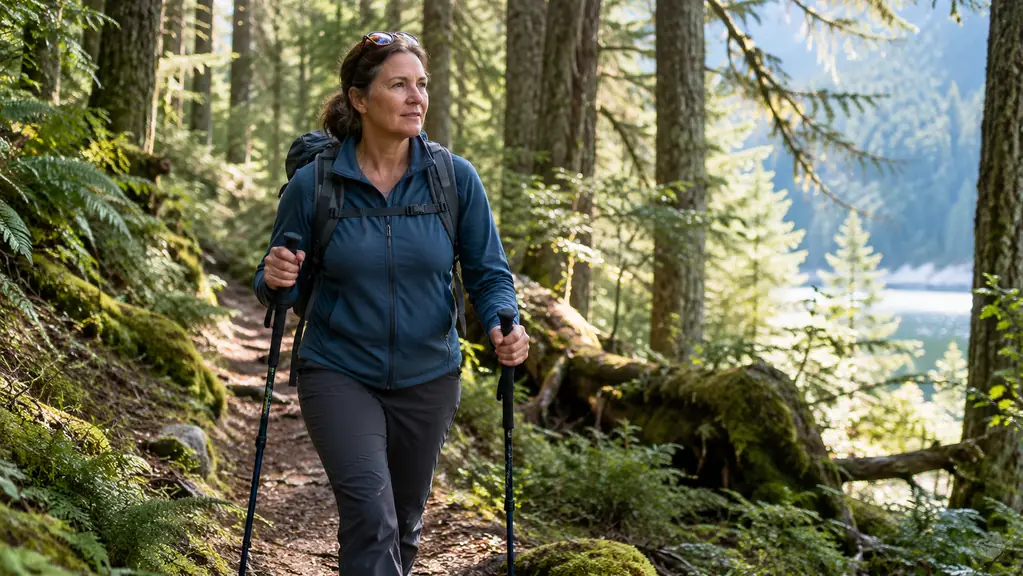
I bought a pair of Cascade Mountain Tech trekking poles because every trailhead parking lot seemed to have at least one pair leaning against a bumper. The reviews were good, the price was reasonable, and my left knee, which has complained since college volleyball, told me it was time to stop being stubborn. After several months of using them on the Chuckanut trails and a few longer trips in the North Cascades, I have thoughts. Some of them match the hype. Some of them do not.
This is not a review written after one afternoon walk. I am Tessa Marlow, a retired middle school science teacher in Bellingham, Washington. I hike alone on weekdays and with my sister Jen on weekends. My knee injury means I care about how weight transfers through a pole, not just how the poles look on a gear shelf. I have used these poles on muddy rooty trails, on gravel, on snow, and on one long descent that made me grateful for every gram of aluminum under my hands.
The Quick Verdict
A genuinely good, affordable pole for day hikers and weekend backpackers, with a few compromises that only show up after you have used them for a while.
Amazon Check Today's Price →The poles I keep reaching for on every hike
Cascade Mountain Tech trekking poles are the pair I grab first. See today's price on Amazon and decide if they fit your trail style.
Amazon Check Today's Price on Amazon →How I've Used Them
I picked these up in early spring, which in Bellingham means rain, mud, and trails that change shape every week. That turned out to be a good testing ground. The Cascade Mountain Tech poles have been on Chuckanut Mountain more times than I can count, on the quieter trails near Baker Lake, and on a week-long trip in the North Cascades where the descents went on long enough to make me pay attention to every step.
The poles are light enough that I forget they are in my hand on the flats. On the climbs, the extended grip lets me choke up without stopping to adjust the length. On the descents, the aluminum shafts take a surprising amount of sting out of each step. My left knee still lets me know when I have pushed too hard, but the difference between hiking with these poles and hiking without them is not subtle.
I also used the rubber tips on a few paved sections where the trail crosses a road. That is the kind of detail that sounds small until you are standing on asphalt trying not to slide. The tip kit that comes with the poles is one of the reasons I chose them over a pair that did not include it.
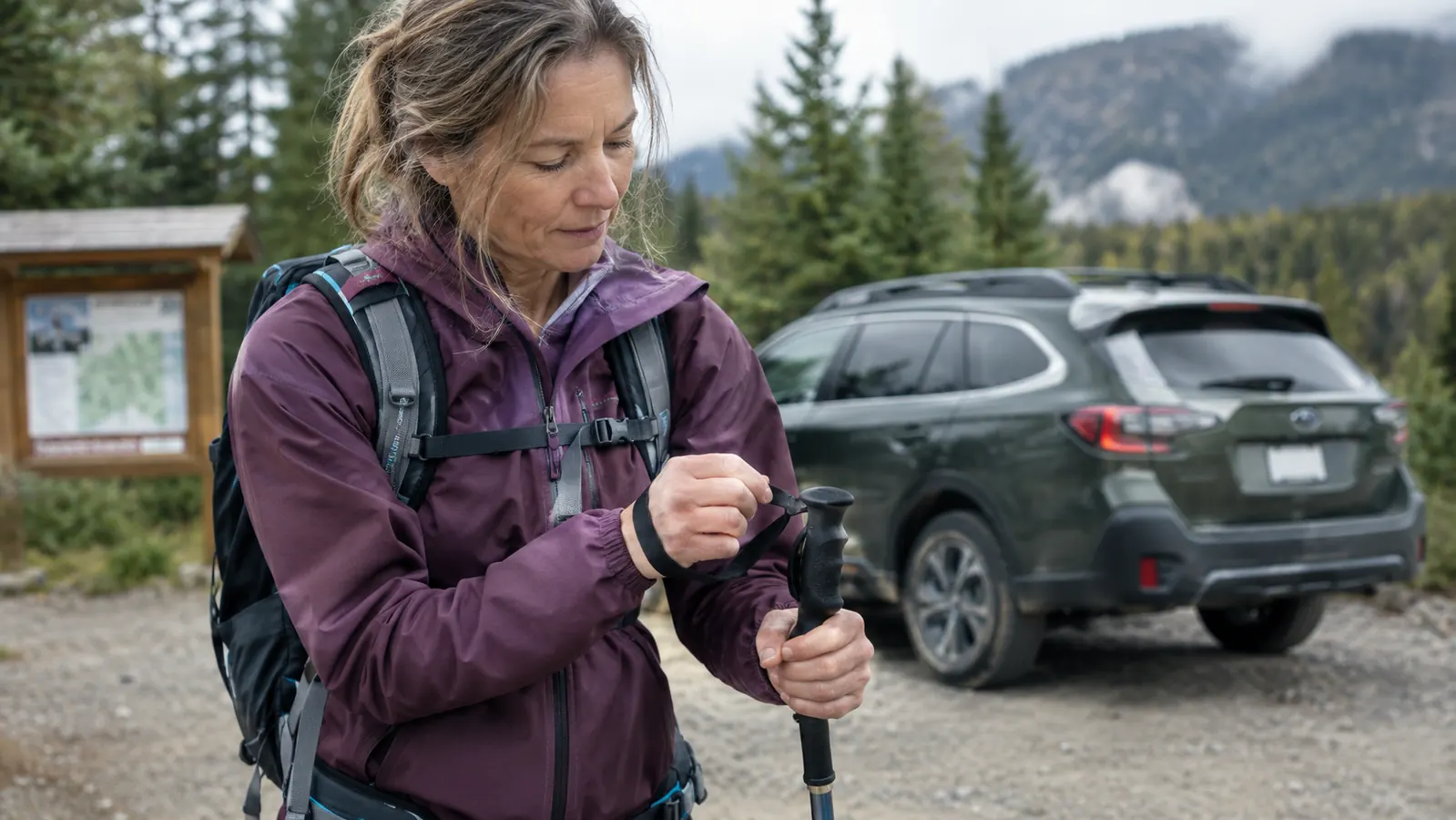
One more thing about the way I use them: I keep them in the Subaru year-round. That means they have been through hot car summers and cold wet winters. The grips have not cracked, the locks have not frozen, and the sections still slide together smoothly. That kind of durability is easy to overlook in a review, but it matters when you are pulling poles out of the car at a trailhead in November.
What the Hype Gets Right
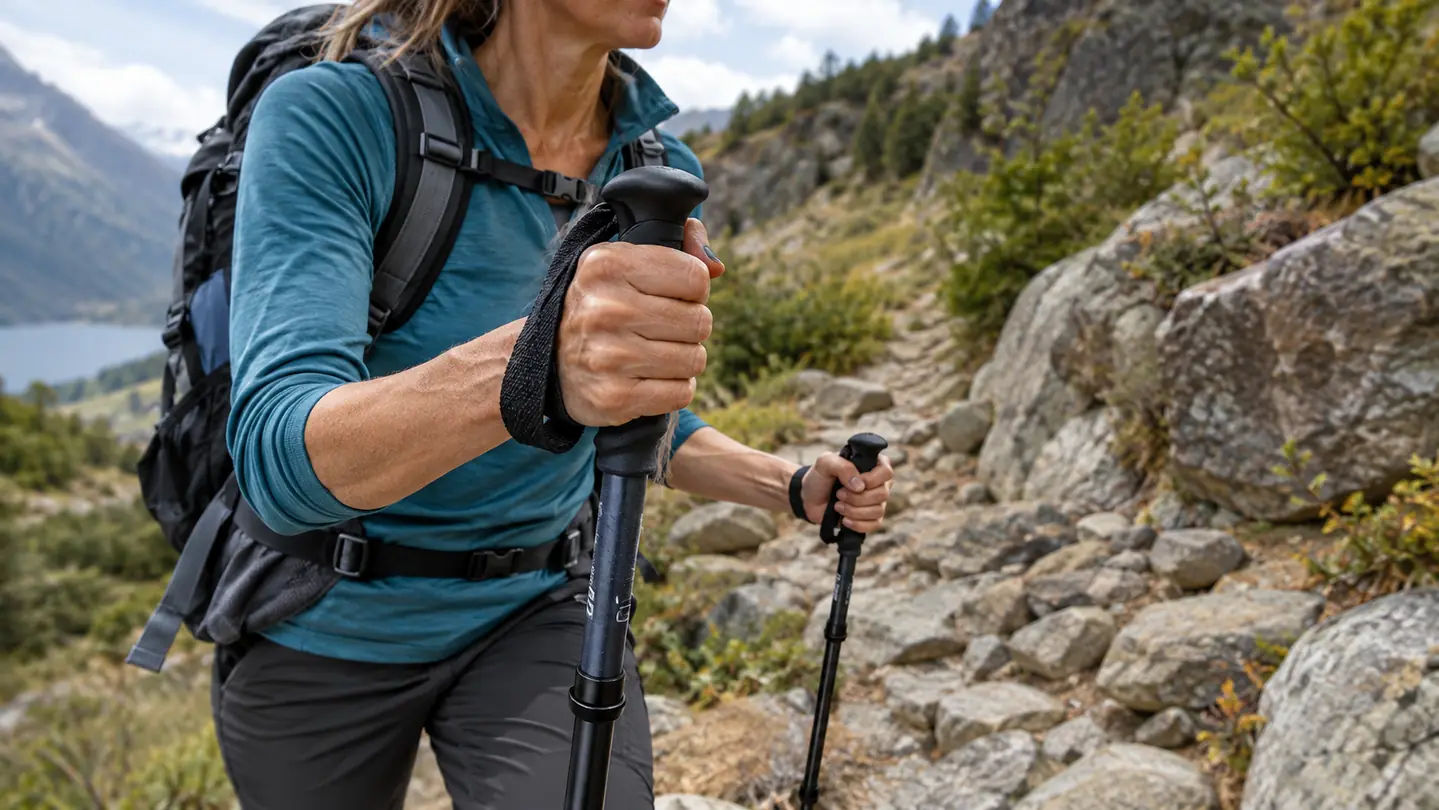
The hype focuses on three things: weight, grip, and price. I can confirm all three, with some context. The weight is genuinely low for an aluminum pole. I have carried them in one hand for miles while eating a sandwich and did not feel like I was hauling a tent pole. The grip is comfortable for my hand, and the extended section is useful on steep sections where a normal grip would leave me bent over.
The price is where the hype gets the most attention, and I will not pretend it was not part of my decision. But the value shows up in how the poles behave over time. After a season of use, the locks still hold, the tips still fit, and the sections have not developed the wobble I have felt in cheaper poles. That is the part of the review that matters more than the first impression.
I also appreciate that Cascade Mountain Tech did not overload the design. The twist locks are simple, the straps are straightforward, and the baskets do what baskets are supposed to do. There is no electronic gadget, no complicated release mechanism, nothing that can fail in a way I cannot fix on the trail. For someone who likes gear that stays out of the way, that is a feature.
The extended grip deserves its own paragraph. On a steep climb, I slide my hand down below the main grip and shorten my effective pole length without stopping. That sounds like a small thing, but it means I keep my rhythm on switchbacks. On the way down, I can do the opposite and lengthen my reach. The grip is long enough that I do not have to think about where my hand is, which is exactly what I want.
The locking mechanism is another place where the hype holds up. The twist locks are not fancy, but they are reliable. I have had them slip once, and that was because I did not tighten them enough after a friend borrowed the poles and adjusted them for her height. Once I got into the habit of giving each section a solid turn, I stopped thinking about it. That is the kind of reliability that matters on a long day.
After a season of muddy Chuckanut trails and one long North Cascades descent, the twist locks still hold.
What Nobody Tells You
Here is the honest part. The twist locks work, but they need a firm hand. If you do not tighten them enough, the lower section can slip on a steep climb. If you tighten them too much, they can be hard to release with cold fingers. You will figure out the right feel after a few hikes, but the first few adjustments will not be as smooth as the marketing photos suggest.
The rubber tips are another thing nobody mentions. They are great on pavement and on smooth rock, but they wear down if you use them on rough trails. I learned to swap them for the other tips that came in the kit when I am heading into rocky terrain. That means carrying the little tool and the spare tips with me, which is easy to forget. It is not a dealbreaker, but it is a habit you have to build.
The wrist straps took me longer to like than I expected. When they are adjusted correctly, they do exactly what they are supposed to do: they let you push down on the pole without gripping it tightly. But getting them adjusted correctly took a few tries. I have seen other hikers give up on the straps entirely and just hold the handles. That works too, but you lose some of the benefit.
The baskets also deserve a mention. The ones that come with the poles are fine on dirt and gravel, but they can catch on roots and brush. On the Chuckanut trails, where the path is narrow and lined with salal, I have had to stop and untangle a basket more than once. If you hike in open country, you may not notice. If you hike in the Pacific Northwest, you will.
Another thing I did not expect is how much the poles change your pace. When I first started using them, I tried to swing them like I had seen in videos, and I ended up feeling clumsy. It took a few hikes to find a rhythm. Now I barely think about it. But the learning curve is real, and it is worth knowing before you decide the poles are not for you.
Maintenance is simpler than I expected. I wipe the shafts down after muddy hikes, check the tips now and then, and tighten the locks before I put them in the Subaru. That is about it. I have not needed to replace any parts yet, and I do not expect to anytime soon. For someone who does not want another project, that is the right kind of gear.
What I Liked
- Light enough for day hikes
- Extended grip helps on steep climbs
- Tip kit adds versatility
- Easy to adjust on the trail
- Simple design that stays out of the way
Where It Falls Short
- Twist locks need a firm hand
- Rubber tips wear down on rough terrain
- Wrist straps take practice
- Baskets can catch on roots and brush
The Trade-Offs
The biggest trade-off is the lock style. More expensive poles often use lever locks, which are faster to adjust and easier to operate with gloves on. The twist locks on these poles are not slow, but they are not as quick. For a day hiker who adjusts length once at the trailhead and again at the top of a climb, that difference does not matter much. For someone who is constantly changing terrain, it might.
The other trade-off is that these are not ultralight poles. They are light for aluminum poles, but carbon fiber poles are lighter. I notice the difference on a long day, but I also notice that I do not have to treat these poles like something fragile. I have banged them on rocks, leaned on them hard, and stuffed them in the back of the Subaru without thinking twice. That durability is worth something.
There is also the question of length. The poles fold down to a size that fits in the back of my Subaru, but they are not as compact as some folding poles. If you are packing for a flight or trying to fit them in a small backpack, the sections take up more space than a more compact folding pair. I have not found that to be a problem for car camping and day hikes, but it is worth knowing.
A Closer Look at the Tip Kit
The tip kit is one of those features that sounds like a throw-in until you actually need it. The poles come with a set of tips for dirt and rock, plus rubber tips for pavement and indoor use. Switching between them takes a few seconds with the little tool that is included. I have used the rubber tips on the paved path around Lake Padden and the other tips on the rocky sections of the North Cascades.
The rubber tips are the ones that will wear out first. That is not a criticism of the poles, just a fact about rubber on asphalt. I keep a spare set in the glove compartment of the Subaru so I am never caught without them. The other tips, by contrast, have held up well. After a season of rocky descents, they still bite into the trail the way they did on day one.
One thing I wish the kit included is a second set of baskets. The baskets that come with the poles are fine for most trails, but they are not ideal for deep snow or very soft mud. If you plan to use the poles in winter conditions, you may want to buy a larger basket separately. That is an extra cost, but it is also a sign that the basic kit is designed for the conditions most day hikers actually meet.
Who This Is For
These poles are for the day hiker and the weekend backpacker who wants a reliable pair without overthinking the purchase. They are for someone like me, with a knee that appreciates a little help on the downhills, and for someone who wants a grip that works on steep climbs. If you hike a few times a month and you want poles that do the job without demanding attention, the Cascade Mountain Tech poles are a sensible choice.
They are also for people who hike in places where poles get banged around. I have used mine on rocky trails, on gravel roads, and on the kind of muddy slopes that make other hikers turn back. The poles have scratches now, and they still work perfectly. That is the kind of gear I trust.
Who Should Skip It
If you are a thru-hiker counting every ounce, or someone who adjusts pole length constantly through the day, you will probably be happier with a lighter carbon fiber pair or a lever-lock design. If you already own a pair of trekking poles that work for you, there is no reason to switch just because these are popular. The honest answer is that these poles are very good at being a solid, affordable tool. They are not trying to be the last word in hiking gear.
I would also tell a hiker who only uses poles on the occasional flat walk that they may not need the extended grip or the tip kit. Those features add a little weight and a little complexity. If you want a simple pair for simple trails, there are cheaper and simpler options. But for the kind of hiking most of us actually do, with climbs and descents and the occasional paved section, the extra features earn their place.
After all that, here is my bottom line. The Cascade Mountain Tech trekking poles are not perfect, and I would not want them to be, because perfection usually comes with a price I am not willing to pay. They are honest tools that do their job well. If you are looking for a first pair of poles or a reliable replacement for a pair that finally gave up, these are worth your attention. I still reach for mine every time I head to the trailhead.
Still deciding? These are the poles I keep in the Subaru
After months of use, the Cascade Mountain Tech trekking poles are the pair I trust on every trail. Check today's price on Amazon and see if they belong in your car too.
Amazon Check Today's Price on Amazon →