
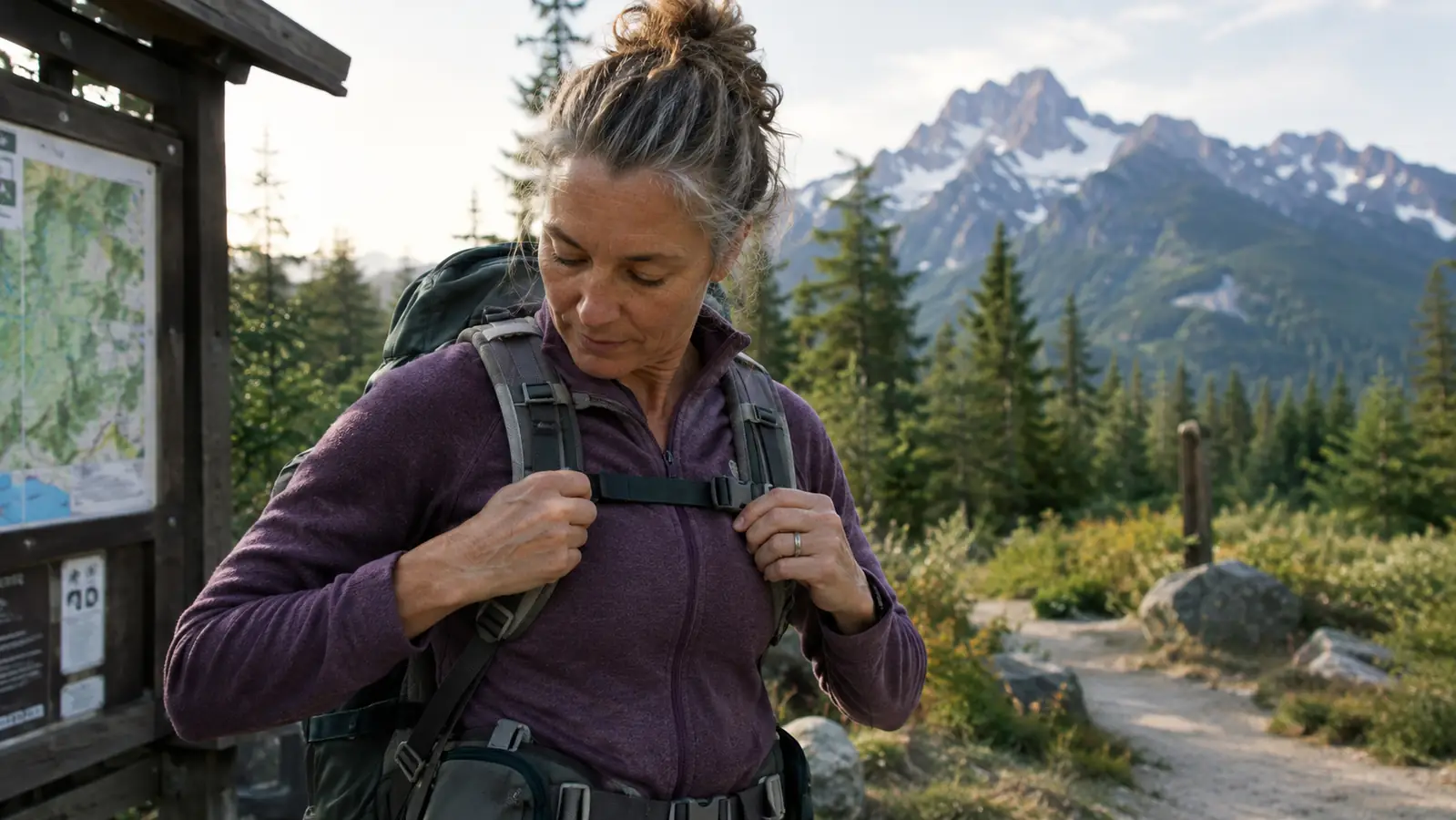
The thing nobody tells you about budget hiking daypacks is that the reviews all read the same. Lightweight. Comfortable. Great value. I must have skimmed forty of them before I ordered the SKYSPER 30L, and not one told me what I actually needed to know: whether the hip belt would hold weight without digging into my hip bones, whether the fabric would shrug off a North Cascades drizzle, whether the zippers would still glide after a season of trail dust. So I bought one and spent six months finding out myself.
A quick word on who is doing this testing. I am Tessa, I am 54, I have hiked the Chuckanut trails and the North Cascades for years, and I carry an old left-knee injury from college volleyball. That means I care about load transfer the way other people care about pack weight. A pack that lets the hip belt do the work keeps my knee happy. A pack that dumps everything onto my shoulders makes the last mile miserable. The SKYSPER has been on roughly twenty-five hikes since spring, from a two-hour loop at Fragrance Lake to a full-day push up Sauk Mountain, and this is the honest report.
The Quick Verdict
A genuinely comfortable budget daypack for day hikes and light travel, with a hip belt that actually does its job. It is not a premium pack, and it does not pretend to be. Know what you are buying and it will serve you well.
Amazon Check Today's Price →The budget daypack that actually carries its weight
After six months and twenty-five hikes, the SKYSPER 30L is still the pack I grab for most day trips. It transfers load to the hips better than anything else I have tried at this level, and it has taken real abuse without failing.
Amazon Check Today's Price on Amazon →How I've Used It
Most of my testing happened on familiar ground. The Chuckanut trails behind Bellingham are steep, rooty, and often damp, which makes them a good place to find out if a pack is going to slip or chafe. The first real test came on a drizzly Tuesday in late April on the Fragrance Lake trail, when I left the rain cover at home and the pack took a steady drizzle for two hours. Everything inside stayed dry, and I stopped worrying about the fabric after that. In June, on a hot Saturday with Jen, I carried three liters of water plus both of our lunches, and the hip belt held the load without shifting even on the steep descent back to the trailhead. I also took the SKYSPER on a week in the North Cascades in July, where it handled a full day of sun, a sudden afternoon thunderstorm, and one memorable scramble over a fallen tree where I did not bother to take the pack off.
On a typical weekday hike I carry about twelve pounds: a liter and a half of water, a puffy jacket, a rain shell, lunch, a first-aid kit, a map, and my camera. On weekend hikes with my sister Jen, I add a second water bottle, an extra layer, and sometimes her binoculars when she decides she does not want to carry them. The 30L size swallows all of it without feeling cavernous, and it compresses down fine when I am carrying less.
I deliberately did not baby this pack. I set it down on wet rocks, hung it from a branch by one strap, stuffed it into the back of my Subaru Outback under a pile of muddy boots. I wanted to know what a normal person's pack looks like after a season, not what it looks like in a product photo.
What Nobody Tells You Before You Buy
This is the part I wish someone had explained to me before I bought it. A 30L daypack is not a small overnight pack, and it is not a big daypack. It sits in an awkward middle. For a full day out in the North Cascades in shoulder season, when I need a puffy, a shell, gloves, a hat, extra water, and food, 30L is just about perfect. For a three-mile stroll on a warm afternoon, it is more pack than I need, and it shows.
The other thing nobody tells you: the SKYSPER comes in a 20L and a 30L, and the difference is not just capacity. The 30L version carries a proper hip belt with padded wings, while the smaller one is more of a sling-style pack. If you are choosing between them, pick based on the hip belt, not the number. The whole reason this pack works for me is that the belt takes weight off my shoulders and my knee.
That sizing confusion is worth spelling out because the listing lumps both sizes together and a lot of the reviews do not say which one they bought. A five-star review that raves about the hip belt might be describing the 30L. A complaint about too much pack for a light hike might be someone who should have bought the 20L. Read the reviews with that in mind.
The product page shows a 4.6-star average from nearly six thousand reviews, and that number is real. But here is what the aggregate rating does not tell you. A large share of those reviews come from people describing a first hiking pack or a gift, which means the average reviewer has not put the pack through a season of abuse. The people who review gear after a month are not the people who know whether the zippers survive a winter. Treat the rating as a useful signal, not a durability test.
The Hip Belt Question
Here is the honest truth about budget pack hip belts: most of them are decorative. They exist so the listing can say 'hip belt included.' The SKYSPER belt is not that. It is not a premium belt like you would find on an Osprey, but it is a real belt with real padding, and it does real work.
For me this matters more than it might for other people. My left knee is the thing that ends hikes, not my lungs. When the hip belt is snugged properly, the pack's weight rides on my pelvis and my legs do the carrying. I remember the exact moment it clicked. About two miles up Sauk Mountain, I realized I had not thought about my shoulders once since the trailhead. With my old pack, they would have been digging in by then. I stopped, loosened the shoulder straps a full inch, and let the belt do the work. My knee complained on the descent, as it always does, but my back and shoulders felt fresh at the car. That is the difference a real hip belt makes over a decorative one.
The tradeoff: the belt is not heavily padded, and it does not have the sculpted, wrap-around fit of a premium pack. If you are carrying more than about fifteen pounds for a full day, you will feel the edges of the padding. For day-hike loads, it is fine. For anything heavier, I would want a pack with a stiffer frame and a beefier belt.
Fabric, Zippers, and the Rain Test
The fabric is where I expected this pack to let me down, and it has not. The listing describes it as water-resistant, which I read as 'fine in a sprinkle, soaked in a downpour.' That has mostly been accurate. In the July thunderstorm, the pack got a genuine soaking and the contents stayed dry, which surprised me. But I also saw water bead on the surface and then soak in slowly where the pack was pressed against my back. If you hike somewhere it rains for hours, put your phone and camera in a dry bag. That is not a criticism of this pack. It is true of most packs at any price.
The zippers have been the real pleasant surprise. Cheap zippers are the first thing to fail on budget gear, and after a season of trail dust, wet weather, and being yanked open one-handed, both main zippers still run smooth. I tested them the way I actually use them, which is not gently. On a wet October morning at Chuckanut Falls I opened and closed the main compartment at least a dozen times digging for a dry pair of gloves, and the zipper never once caught or snagged. The only trouble I had all season was a grain of sand that worked its way into the teeth, and it cleared with a quick rinse at the tap. The zipper pulls are small, which is annoying with gloves on, and I have replaced one with a loop of paracord. That is a five-minute fix, not a dealbreaker.
The back panel is a mesh-covered foam pad, which means it breathes okay and does not turn my back into a swamp on warm days. It also means the pack does not stand up on its own when you set it down. It flops over. That is a small thing, but it is the kind of small thing nobody puts in a review.
After six months and twenty-five hikes, the hip belt is the reason I keep reaching for this pack. It does what budget pack hip belts are supposed to do but so rarely do.
Using It as a Travel Bag
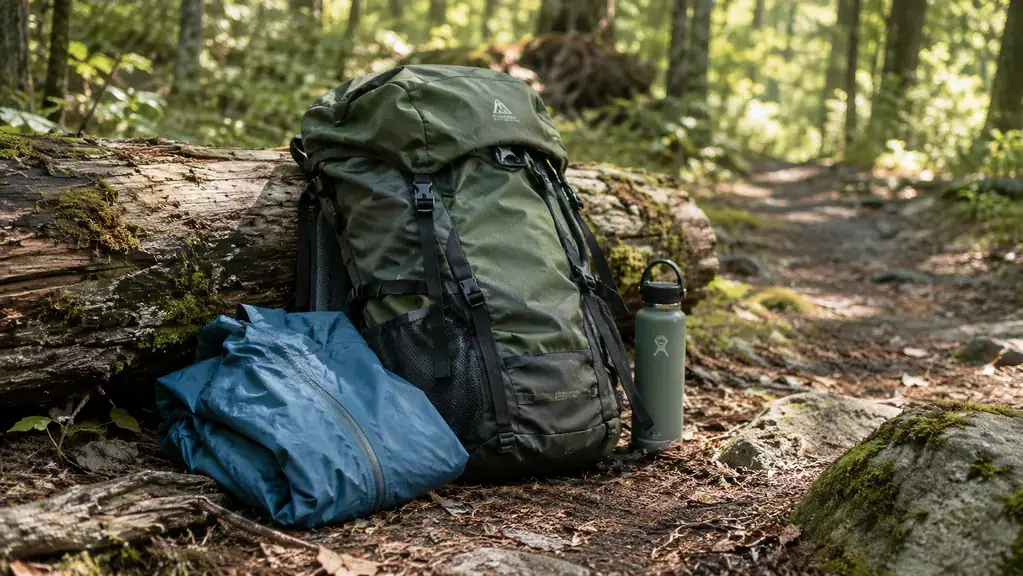
Because the listing markets this as a travel backpack too, I tested it that way. I took it on a four-day trip to Portland in September, using it as my only carry-on. It fit under the airplane seat in front of me, which surprised me for a 30L pack, and it was a lot easier to haul through the airport than my rolling suitcase. The flight was a full regional jet, the kind where the overhead bins fill up fast, and I was glad the pack fit under the seat with room to spare for my feet. The woman next to me wrestled a rolling suitcase into the bin, and for the first time in years I did not envy her. Walking from the train to my hotel with the pack on one shoulder, I understood why so many travelers are switching to this style. The lack of a frame is an advantage here, because the pack squishes into tight spaces without a fight.
The catch is organization. A hiking pack is a bucket with pockets, not a suitcase with compartments. I ended up using packing cubes for the first time in my life, and that solved it. With three small cubes, everything had a place and I could find my charger without unpacking the whole bag. If you travel with this pack, budget for cubes.
One more travel note. The pack has a small pocket on the front that is perfect for a boarding pass, a phone, or a passport. It is not a secure pocket, so I would not keep anything important in it while the pack is on my back in a crowd. But for the quick reach-and-grab moments at security, it is exactly where a pocket should be.
And to be clear about scope: this pack has not been on an overnight trip, because 30L is too small for my overnight kit and I would not recommend trying to make it work. I am reviewing it as a daypack and a travel bag, because that is what it is.
What I'd Change
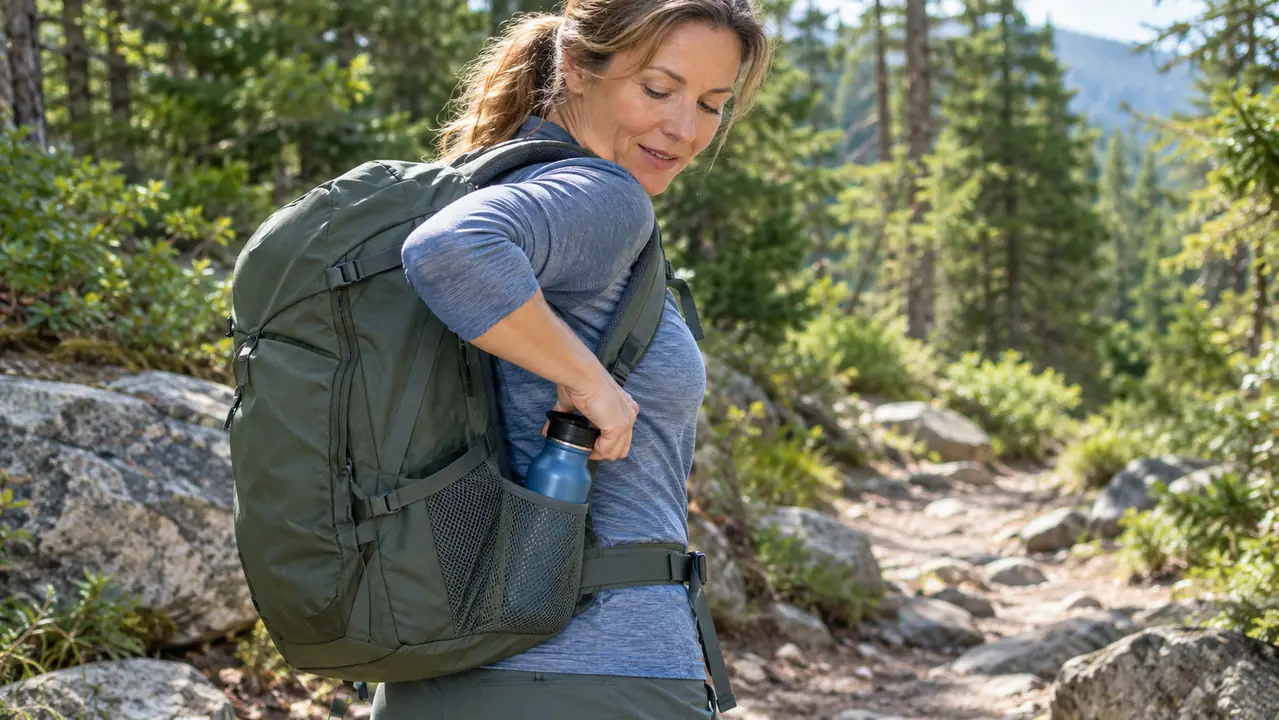
If I could change three things, they would be these. First, the sternum strap is fiddly. It slides up and down on the shoulder straps and I have to re-center it almost every time I put the pack on. Second, the side pockets are snug. A standard water bottle fits, but a taller bottle with a straw lid does not, and getting the bottle back in while the pack is on my back takes a contortionist. Third, the pack has no real frame. The foam back panel gives it some structure, but you can feel the difference if you try to carry a heavy load. None of these are reasons to avoid the pack. They are reasons to know what you are buying.
The other change I would make is the daisy chain on the front. It is there, it works, and I have clipped a carabiner to it exactly twice. I would trade it for a second interior pocket. The pack has one big main compartment, a small front pocket, and the two side pockets. That is enough for hiking. For travel, it is tight. A mesh divider inside the main compartment would make this pack nearly perfect.
What I Liked
- Hip belt actually transfers load to the hips instead of being decorative
- Fabric has held up through a full season of wet, dirty trail use
- Zippers still glide smoothly after months of abuse
- 30L size is right for full-day hikes and light travel
- Compresses down well for lighter loads
- Honest value for what it does
Where It Falls Short
- Fiddly sternum strap that drifts out of position
- Side pockets too snug for taller water bottles
- No frame, so heavy loads make the pack sag
- Water resistance is decent, not a dry bag
- Small zipper pulls are hard to grip with gloves
Who This Is For
This pack is for the day hiker who wants one bag that does everything: weekday loops, weekend hikes with a friend, and the occasional trip where it doubles as a carry-on. It is for people who would rather spend their money on gas and trail passes than on a pack that costs three times as much. If you carry day-hike loads, call it twelve to fifteen pounds, and you want a hip belt that actually works, the SKYSPER 30L is a genuinely good choice.
If you are the kind of hiker who keeps a pack in the car so you can stop at a trailhead on a whim, this is that pack. It is light enough to forget it is there, tough enough to handle being thrown around, and comfortable enough that you will not think about it on the trail. That is the highest compliment I can give any piece of gear.
Who Should Skip It
Skip it if you are planning multi-day trips with a twenty-five-pound load. The lack of a frame shows up fast once you go past about fifteen pounds, and a framed pack will serve you better. Skip it if you want a featherweight shell of a pack, because at 30L this one is not the lightest thing in its class. And skip it if you are tall with a long torso, because the harness is not adjustable for torso length and the fit is what it is. For everyone else, it is worth a serious look.
One more honest caveat. If you are the kind of hiker who likes to know exactly what every piece of gear weighs, this pack is not going to satisfy you. SKYSPER does not publish a precise weight for the 30L, and my kitchen scale is not precise enough to be worth quoting. What I can tell you is that it feels lighter than my old framed pack and heavier than a true minimalist daypack. If weight is your obsession, buy a scale and a pack with a published spec sheet.
Still the pack I grab for most day hikes
After a full season of honest use, the SKYSPER 30L has earned its place in my gear closet. If your day hikes look like mine, it is worth checking today's price on Amazon.
Amazon Check Today's Price on Amazon →