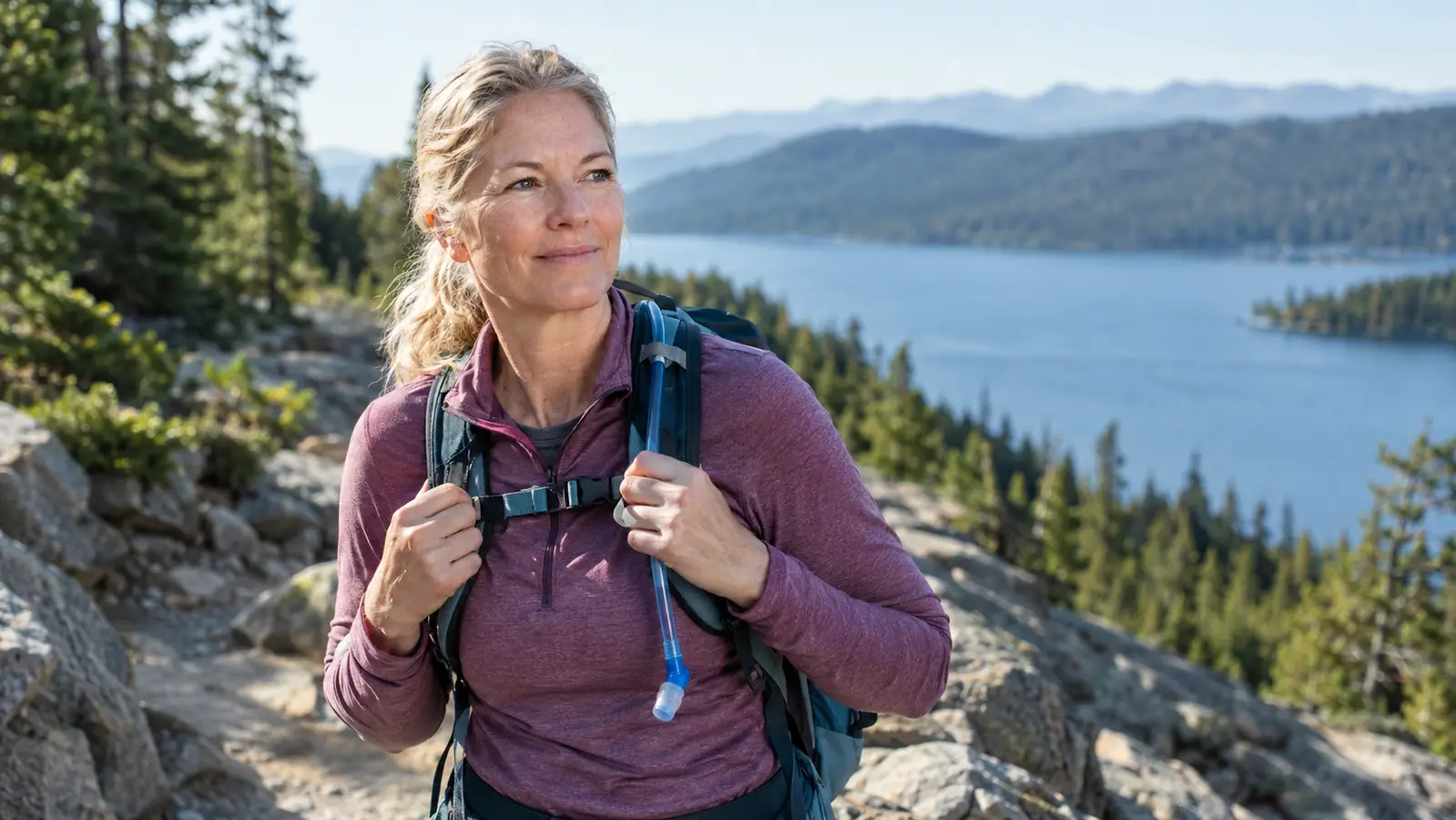
By the time I ordered the N NEVO RHINO 18L hydration pack, I had read every glowing review I could find. It was the pack everyone recommended, the one that kept showing up in the same breath as brands that cost three times as much. So I bought it, loaded it up, and spent six months wearing it on the North Cascades trails near my home in Bellingham, plus a couple of longer trips. I wanted to know what the hype got right, what it got wrong, and what nobody tells you before you click buy. This is that review.
A quick note on who I am and why my opinion might matter to you: I am Tessa, a 54-year-old retired science teacher who hikes three or four days a week. I have an old left-knee injury from college volleyball, so how a pack transfers weight matters to me more than it does to most people. My sister Jen joins me on weekends, and I hike alone on weekdays. I am not a thru-hiker and I am not a gear snob. I am the person who wants a pack that carries water, a sandwich, and a rain shell without making my shoulders ache by mile four.
The Quick Verdict
For day hikes and light overnights, the N NEVO RHINO 18L is genuinely excellent value. It is comfortable, well organized, and the included 3L bladder works. It is not a featherweight pack and the waist belt is basic, but it beats almost everything I have tested.
Amazon Check Today's Price →Still the best-value 18L hydration pack I have tested
After six months and dozens of trail miles, the N NEVO RHINO 18L is the pack I reach for on most day hikes. Check today's price on Amazon and see if it fits your trail routine.
Amazon Check Today's Price on Amazon →How I Tested It
I did not test this pack on a single perfect afternoon and call it a review. I wore it on more than 30 outings between late spring and early winter. That included a 14-mile day on the Maple Pass Loop, a humid August hike where I drank every drop of the 3L bladder, a rainy October walk on the Chuckanut trails, and a two-night trip where the pack carried everything I needed except my sleeping bag.
I weighed the pack on a kitchen scale, measured the bladder capacity with a water pitcher, and timed how long it took to fill, clean, and dry the bladder. I also carried the same load in two other packs I own, a more expensive name-brand pack and an older budget pack, so I could compare the N NEVO RHINO against something in its own price class and something well above it.
I will give you one concrete day because it is the one that made up my mind. On a Saturday in late July, my sister Jen and I drove to the Maple Pass Loop trailhead in my Subaru Outback. The pack weighed 11 pounds 6 ounces on my kitchen scale before I added water, and 19 pounds 2 ounces with a full bladder, lunch, two extra water bottles for Jen's kids, and my rain shell. We were on the trail by 7:40 in the morning and back at the car just before 4:00. My left knee, the one I hurt playing college volleyball, complained on the descent no matter what I wore, but my shoulders and back felt fine the whole day. That was the moment I stopped comparing the N NEVO RHINO to packs that cost three times as much and started judging it on its own terms.
The short version: the N NEVO RHINO pack surprised me in the ways that matter and disappointed me in a few small ways that I will walk you through. None of the disappointments made me stop using it. A few of them made me change how I pack.
What Nobody Tells You Before You Buy
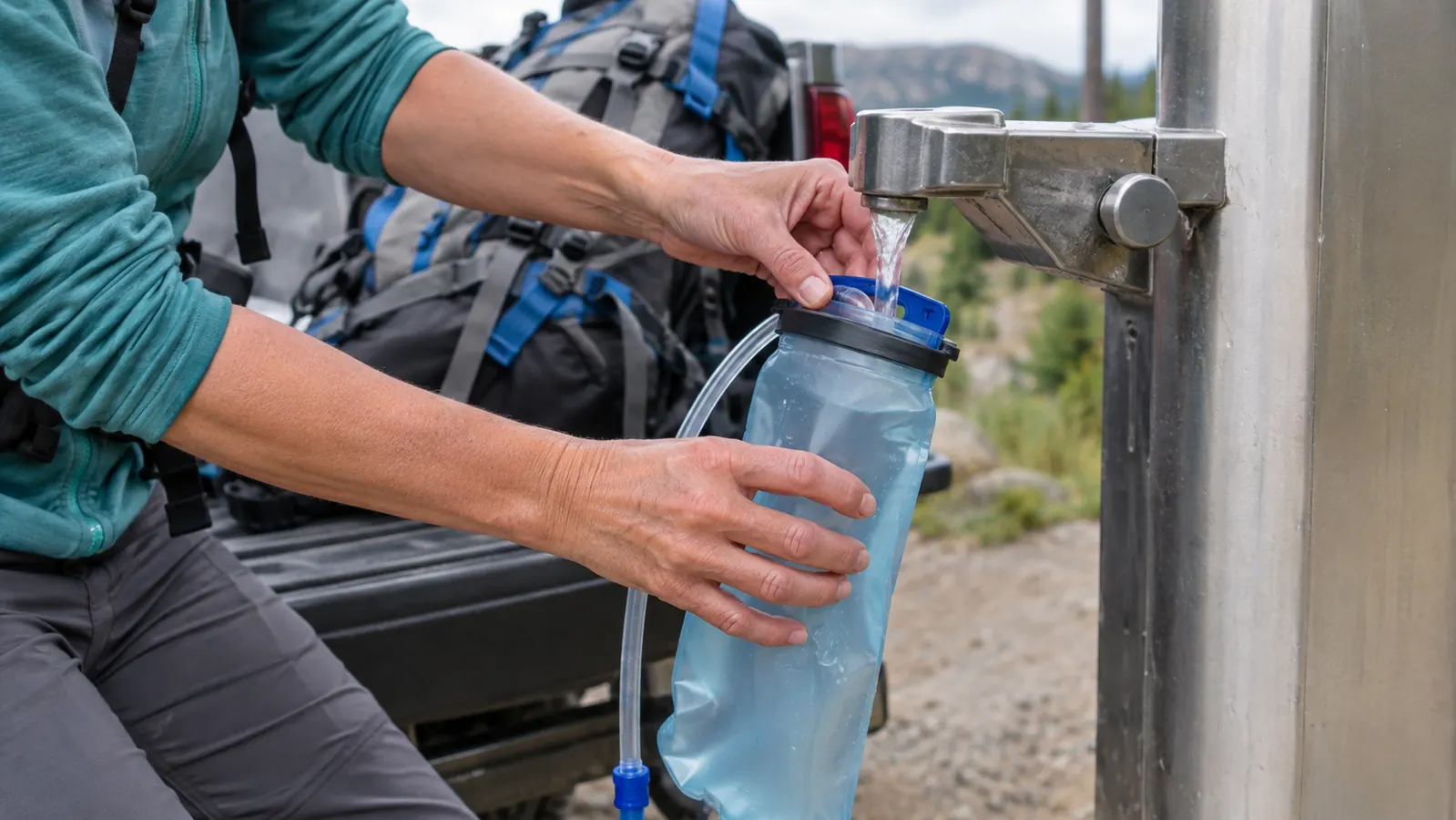
The biggest thing nobody tells you is that the included 3L bladder is good, but it is not great. The hose delivers water easily and the bite valve does not leak, which is more than I can say for bladders that cost twice as much. But the bladder is shaped like a wide rectangle, which means it does not fill the curved back panel of the pack perfectly. When it is full, it pushes against the back panel a little more than I would like. It is not uncomfortable, and I never felt it against my spine, but it is there.
Here is what I tried first and why it did not work: I stuffed my puffy jacket into the main compartment behind the bladder, thinking the curved back panel would let the bladder sit closer to my spine. It did not. The jacket pushed the bladder forward and the whole load felt like it was leaning away from my back. The fix turned out to be simple. I now put the jacket in the bottom of the main compartment, rolled tight, and let the bladder sit against the back panel on its own. The pack rides better and I stopped fiddling with it on the trail. That is the kind of thing you only learn by wearing a pack for a few weeks, which is why the reviews you read on the first page of a search rarely mention it.
The second thing nobody tells you is that the advertised 18L capacity includes the bladder compartment. That sounds obvious, but plenty of pack makers list capacity the same way, and it means your real carrying capacity is closer to 15L. For a day hike, that is plenty. For a light overnight, you will need to be disciplined about what you bring.
The third thing is the waist belt. It is a simple webbing belt with small pockets, not a padded load-transfer belt like you get on a proper backpacking pack. For loads under about 12 pounds, you will not notice. For a full 18L load with water, food, and a jacket, more of the weight sits on your shoulders than I would like. My knee is the reason I care about load transfer, and I could feel the difference on the long descent from Maple Pass.
The real capacity is closer to 15L once the bladder compartment is counted, and the waist belt is basic. Neither stopped me from using the pack every week. Both changed how I packed.
The Comfort Question
Comfort is where the N NEVO RHINO pack earns its keep. The shoulder straps are wide, padded, and shaped in a way that does not dig into the front of my shoulders. The sternum strap is adjustable and actually stays where I put it, which sounds like a small thing until you have hiked three miles with a sternum strap that has slid up to your collarbone.
The back panel is ventilated. On a hot August day, my back stayed noticeably drier than it does with my older pack. The mesh does not have the fancy suspended design of premium packs, but it works. I never finished a hike with a soaked shirt where the pack sat.
I also learned that the sternum strap position matters more on this pack than on my pricier one. The strap has a track that lets it slide up and down, and I spent one whole morning on the Pine Creek trail with it set too high. By mile two it was pressing on the top of my chest and I kept tugging at it. When I stopped for water, I slid it down to just below my collarbone and the difference was immediate. The load felt steadier and the strap stopped bothering me for the rest of the day. It is a five-second adjustment, but nobody tells you to make it before the first hike, so most people live with a pack that does not fit quite right.
The one comfort issue I kept coming back to is the waist belt. If you hike mostly flat trails or carry less than 10 pounds, you will probably not care. If you hike steep terrain with a full load, you will want a pack with a padded hip belt. I solved this by keeping my water in the bladder, which sits low in the pack, and keeping my heavier items like food and my camera low as well. That shifted enough weight to my hips that the basic belt became fine.
How the 3L Bladder Performs Over Time
The included bladder has now been filled, drained, and dried dozens of times. The bite valve still opens easily and does not drip. The hose connection has not leaked once, and I have checked it after every fill because I am convinced that is where cheap bladders fail. The wide opening makes it easy to add ice cubes on hot days, which I did often in July and August.
Cleaning is straightforward. The cap screws off completely, so I can reach inside with a brush. I hang it upside down to dry with the hose unclipped, and it is dry by morning. I have not noticed any plastic taste, even when I left water in it overnight by accident. That is more than I can say for a budget bladder I owned years ago that made every sip taste like a shower curtain.
One incident worth telling you about: in September I filled the bladder on a Friday, forgot to empty it, and did not open the pack again until the following Thursday. I was sure I would find the inside of the bladder slick with something I did not want to drink from. Instead, the water was still clear and smelled like nothing. I emptied it, rinsed it with warm water and a drop of dish soap, and hung it to dry. I would not make a habit of leaving water in it for a week, but the fact that it survived that mistake without tasting like plastic or mildew is the reason I trust it more than the budget bladder I used years ago.
One honest warning: the hose is not insulated. On a cold October morning, the first sip of water was noticeably cold, and on a freezing day the water in the hose could freeze if you leave the pack in the car. For summer and shoulder-season hiking, this is a non-issue. For winter hiking, you would want an insulated hose cover or a thermos instead.
Organization and Pockets
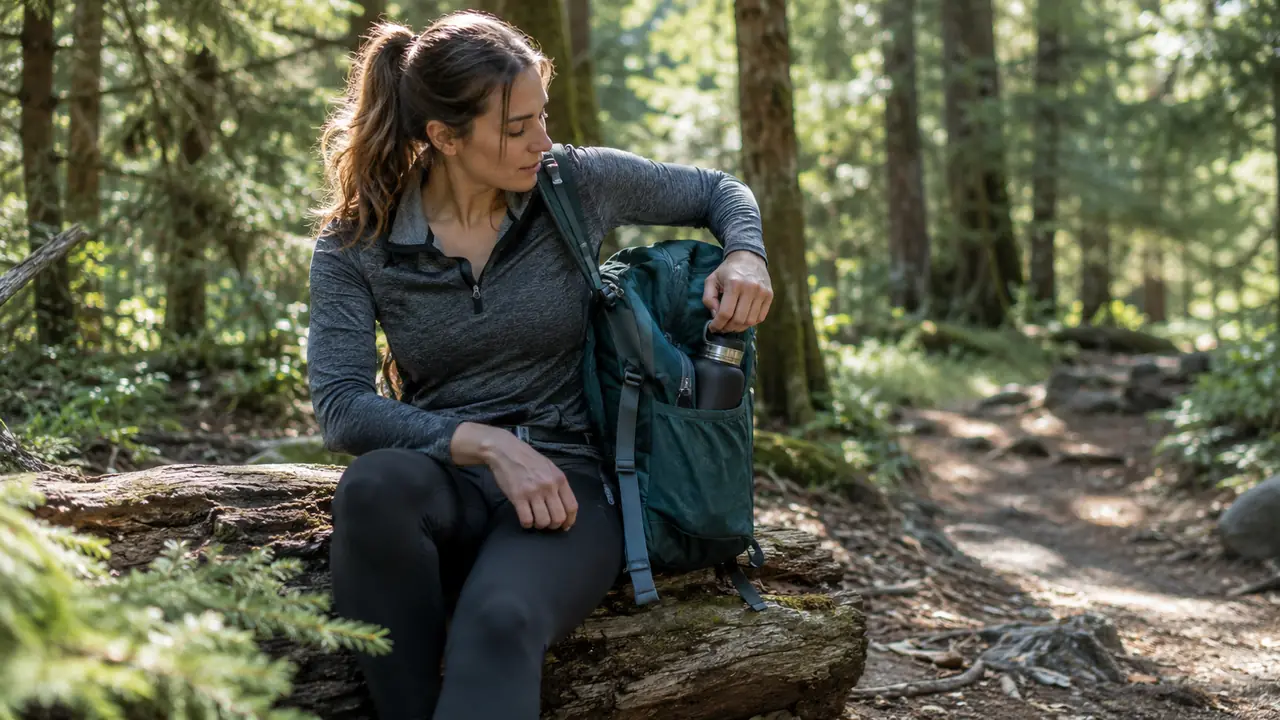
This is where the N NEVO RHINO pack really shines for the price. The main compartment is one big space, which I prefer because it lets me pack around my own stuff instead of fighting a dozen tiny organizers. There is a small zippered pocket on the inside of the main compartment that I used for my keys and a headlamp.
The front pocket is where I keep things I need fast: sunscreen, lip balm, a map, and a snack. It is not quite as easy to access one-handed as I would like, but it is close. The two side mesh pockets are deep enough to hold a 1L water bottle securely, which I tested on a boulder field where I was scrambling with my hands. Neither bottle fell out.
A small thing that surprised me: the front pocket fits a paperback book flat against the pack, which is not true of most packs this size. I tested it on a long lunch break at the Lake 22 trailhead and it was the difference between carrying a book and leaving it in the car. The pocket also has a key clip inside, which I did not notice for the first month. Once I found it, I stopped digging through the bottom of the main compartment for my keys every time I got back to the Outback.
There is a small pocket on the waist belt that fits a phone, though I will be honest that I mostly used it for a granola bar. There is also a loop on the front of the pack that is perfect for clipping a headlamp or a small carabiner. The pack does not have a dedicated sunglasses pocket, which I missed on sunny days. I solved that by clipping my sunglasses to the sternum strap.
How It Handles Rain and Mud
I wore the N NEVO RHINO pack through a steady October rain on the Chuckanut trails, and everything inside stayed dry. The fabric is water-resistant rather than fully waterproof, so I would not trust it in a downpour without a pack cover. I do not own the matching rain cover, so I used a lightweight pack cover I already had. It fit fine.
The zippers have held up well. I have not had a single snag, and the pulls are easy to grab even with cold hands. The bottom of the pack has a slightly thicker fabric, and after setting it down on wet rock, muddy ground, and the tailgate of my Subaru Outback, it still looks new. I did manage to get the shoulder straps muddy once, and they rinsed clean in a creek without any drama.
What I Liked
- Genuinely comfortable for a budget pack, with wide padded shoulder straps and a ventilated back panel
- The included 3L bladder is reliable: easy to clean, no leaks, and no plastic taste
- A real 18L main compartment plus deep side pockets and a useful front pocket
- Excellent value for day hikers who do not want to spend premium money
- Holds up well in rain and mud, with water-resistant fabric and zippers that have not snagged
Where It Falls Short
- The waist belt is basic webbing, not a padded load-transfer belt, so heavy loads sit on your shoulders
- The advertised 18L capacity includes the bladder compartment, so real space is closer to 15L
- The hose is not insulated, which limits winter use
- No dedicated sunglasses pocket, and the front pocket is awkward to open one-handed
Who This Is For
Buy the N NEVO RHINO 18L if you are a day hiker who wants one pack that does everything: water, snacks, layers, a first-aid kit, and a camera. It is also a great choice for someone who is new to hiking and does not want to spend a fortune to find out whether they will actually use a hydration pack. And it is a genuinely good travel pack for long city days, museum trips, or flights where you want water and snacks without paying airport prices.
It is also a smart pick for parents who need a pack that can carry water for two kids. The 18L main compartment gives you room for a couple of extra bottles and a full change of clothes. My sister Jen borrowed it for a day hike with her kids and ordered one for herself the same week.
Who Should Skip It
Skip the N NEVO RHINO pack if you are a serious backpacker who carries 20 or more pounds over multiple days. The waist belt is not built for that kind of load, and your shoulders will let you know by mile six. Look for a pack with a proper padded hip belt and internal frame instead.
Skip it if you hike in freezing weather and need your water to stay liquid. The uninsulated hose is a real limitation in winter. And skip it if you are the kind of person who wants a pack to look sleek and technical. The N NEVO RHINO is a workhorse, not a fashion statement. It looks like what it is: a well-made budget pack that does its job.
The honest bottom line
The N NEVO RHINO 18L is not perfect, but it is the pack I grab first on most hiking days. If you want a hydration pack that works without a premium price tag, check today's price on Amazon.
Amazon Check Today's Price on Amazon →