
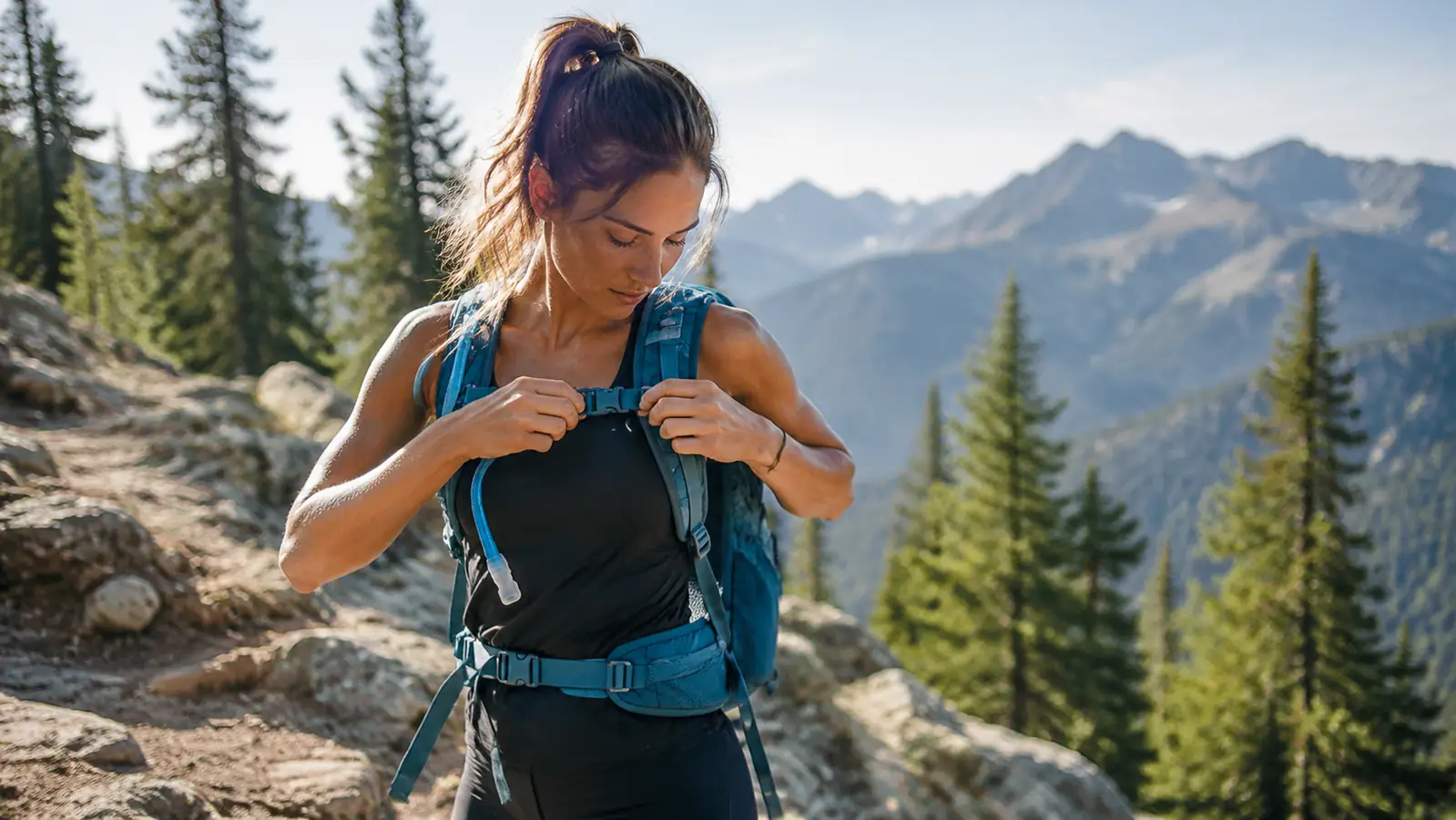
When I started researching hydration packs for day hikes in the North Cascades, I kept coming back to the same two names: the N NEVO RHINO 18L Hydration Backpack and the Camelbak hydration pack. Both carry water on your back. Both have a reservoir and a hose. Both look like the sensible choice in a product photo. The difference only shows up after you have worn them for a few miles, refilled them at a trailhead, and tried to find your keys in the front pocket at the end of the day. I am 54, I have an old left-knee injury from college volleyball, and I retired from teaching middle-school science a few years ago, so I evaluate packs the way I used to grade lab reports: I look at the data, I test the claims, and I do not trust the picture on the box. The Camelbak has been the default answer for so long that it feels like the safe choice, but safe is not the same as right for your specific trails. I also asked Jen to try both packs on the same trails, because her shoulders bother her and my knee bothers me, and a pack that works for one of us might not work for the other.
So I did what I do with most gear questions: I bought both, hiked with both for a month on the same trails, and kept notes. From mid-May to mid-June I carried the N NEVO RHINO on the Chuckanut trails close to home and the Camelbak on the same routes the next day, then I swapped them for a second round so neither pack got the advantage of my fresh legs. On the longer trips, the eight-mile loop near Diablo Lake and the climb up to Maple Pass, I loaded both packs identically and weighed them on my kitchen scale before I left the house; they came within a few ounces of each other, so the comparison was fair. I kept a simple scoring sheet in my field notebook: comfort on the approach, ease of refilling, how often I had to stop to adjust something, and whether I could reach water without taking the pack off. This is the short answer first, then the long answer. If you only want the bottom line: the N NEVO RHINO is the better value for most day hikers, and the Camelbak is the better choice if you already own Camelbak reservoirs or you hate fiddly bite valves.
| N NEVO RHINO 18L | Camelbak Hydration Pack | |
|---|---|---|
| Capacity | 18L total, 3L bladder | Typically 1.5L to 3L depending on model |
| Price | Budget-friendly for the capacity | Premium price, especially for the same capacity |
| Bite valve | Simple push-pull valve, works fine, a little stiff at first | Smoother valve, easier to open with one hand |
| Bladder filling | Wide opening, but you have to thread the hose through the shoulder strap | Tool-free quick disconnect, easier to fill and detach |
| Storage | 18L with multiple pockets, fits a light jacket, lunch, and first aid kit | Smaller total volume on most models, less room for extras |
| Hip belt | Padded with small pockets for phone and keys | Thinner webbing, no pockets on the model I tested |
| Best for | Day hikers who want one pack for water plus gear | Hikers who want a proven reservoir system and don't need much extra storage |
Where the N NEVO RHINO Wins
The N NEVO RHINO wins on the two things that matter most to me on a day hike: total capacity and price. The 18L pack carries a 3L water bladder and still has room for a puffy jacket, a sandwich, a first aid kit, and a paperback I never actually read. My sister Jen and I did an eight-mile loop near Diablo Lake with both packs loaded the same way, and the N NEVO RHINO swallowed everything without bulging. We packed the same load for the Camelbak: the same puffy, the same sandwich, the same kit. The Camelbak model I tested, with its smaller storage, required some creative strapping to fit the same load, and the side pocket that is supposed to hold a water bottle was too shallow for my 1L bottle. The N NEVO RHINO has a deeper side pocket that held the bottle even when I bent over to tie my boots. The main compartment opens wide enough that I can see everything inside, which matters more than it sounds like when you are digging for a headlamp at dusk. The front pocket has a small key clip and enough organization for a phone, a map, and a granola bar wrapper that I keep meaning to throw away.
The second win is the price. The N NEVO RHINO costs a fraction of what a comparable Camelbak costs, and for that price you get a pack that has held up through a month of weekly hikes, including one accidental drop on granite and one encounter with a very insistent squirrel. The stitching on the shoulder straps shows no wear. The zippers still run smooth. I have not had a single seam pop, and I am not gentle with my gear. The drop happened on the trail to the lookout at Oyster Dome, when I set the pack on a granite slab and it slid off onto the rocks. Not a scratch, not a torn seam. The hip belt is the detail I did not expect to care about. With my old knee, I want the weight sitting on my hips instead of my shoulders, and the N NEVO RHINO transfers the load well. On the Maple Pass climb, where the trail gains about 2,000 feet in the first two miles, I kept the hip belt snug and the shoulder straps loose, and my knee complained far less than it does with a pack that hangs low. The small hip pockets also meant I did not have to take the pack off to reach my phone or my lip balm. That sounds like a small thing, but on a windy ridgeline it is the difference between a quick sip of water and a full stop.
Where the Camelbak Wins
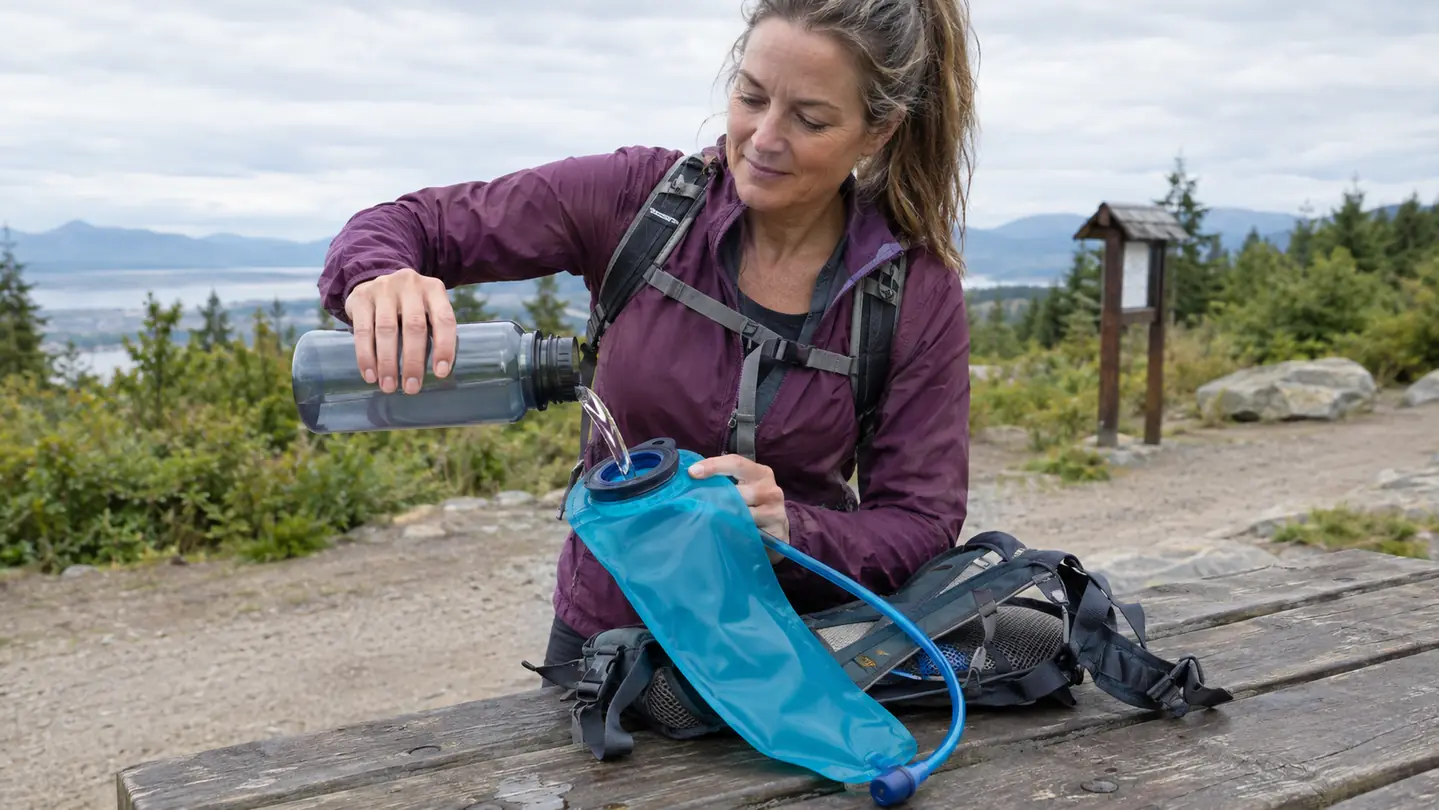
I have to be honest here, because this is where the Camelbak genuinely earns its reputation. The reservoir system is simply better engineered. The quick disconnect on the hose means I can detach the bladder, walk to a trailhead spigot, fill it, and click it back in without threading anything through the pack. With the N NEVO RHINO, I have to route the hose through the shoulder strap every time I refill, which adds about two minutes and a small amount of cursing. On the morning I filled both packs at the Diablo Lake trailhead, the Camelbak was ready in under a minute. The N NEVO RHINO took me three tries to get the hose routed the way I wanted, and I still had to adjust the bite valve clip so it sat where I could reach it without craning my neck. It is not hard. It is just fiddly, and fiddly is the last thing I want at 7:15 in the morning. Jen watched me do this twice and said nothing, which is her way of telling me I am overcomplicating it. The Camelbak also keeps the bite valve clipped to the sternum strap, so it does not swing free and pick up trail dust. And the hose is a touch longer, which matters when you are tall or when you wear the hip belt high. I am neither particularly tall nor particularly short, and I still noticed the difference in how far I could turn my head before the hose pulled tight.
The bite valve is also smoother on the Camelbak. The N NEVO RHINO valve works fine, but it is stiffer and takes a firm bite to open. On a cold morning when my hands are numb, the Camelbak valve is noticeably easier to use. I tested both on a 38-degree morning on the Chuckanut Ridge Trail, and I could open the Camelbak valve with one hand while holding my trekking poles in the other. With the N NEVO RHINO I had to stop, set the poles down, and bite down harder. It is a small difference on a warm day and a real difference in October. If you already own Camelbak reservoirs from a previous pack, the Camelbak is the obvious choice, because you can keep using the reservoirs you already have. That is a genuine advantage, not a marketing one. It is also the reason I would not tell a Camelbak owner to switch just to save money. On the last day of testing I filled both reservoirs with water and a little lemon juice, left them in the packs overnight, and rinsed them the next morning. Neither one held a smell, which is the test I care about most.
Want the 18L pack that fits a full day of gear?
The N NEVO RHINO 18L hydration backpack gives you the storage and the water bladder without the premium price tag. I have been using mine on weekly hikes and it still looks new.
Amazon Check Today's Price on Amazon →
Who Should Buy Which
Buy the N NEVO RHINO if you want one pack that does everything: water, snacks, layers, and a little extra for the person who always forgets their own sunscreen. It is the better value for day hikers and weekend backpackers who do not need the absolute slickest reservoir on the market. Since mid-May I have used mine on twelve hikes: the Diablo Lake loop, the Maple Pass climb, and a handful of shorter Chuckanut trails close to home. The pack has been rained on, dropped on granite, and shoved into the back of my Subaru Outback while still half full, and it has not complained once. The fabric sheds mud and pine needles with a quick wipe, and the zippers have not snagged a single time. The other thing I like is that the N NEVO RHINO does not look like a serious mountaineering pack, which means I do not feel silly wearing it on a two-mile walk to the beach.
Buy the Camelbak if you already have Camelbak reservoirs, or if the quick-disconnect hose is worth the extra money to you. My sister Jen has used Camelbak packs for years, and when she borrows mine she always comments on the hose. For her, the Camelbak is the right call because she already owns two reservoirs and she likes to swap them between packs. For me, the N NEVO RHINO is the right call because I want one pack that carries everything and I do not mind spending two minutes threading a hose. We settled the argument the way we settle most arguments: we hiked the same trail on back-to-back days and compared notes over burgers in Bellingham. We came to the same conclusion from opposite directions. If you are the kind of person who already has a drawer full of Camelbak parts and spare hoses, that ecosystem is worth something real.
Both are good packs. They just make different trade-offs. If I had to pick one for a beginner buying their first hydration pack, I would point them at the N NEVO RHINO, because the money they save can go toward better boots or a proper rain shell. If I had to pick one for someone who already owns Camelbak gear, I would tell them to stick with what they have. The best pack is the one you will actually use, and both of these will get you out the door. Start with the shorter Chuckanut trails before you commit to a full day in the high country, and make sure whatever you buy fits your torso and not just your budget. A pack that rides too low will hurt your shoulders no matter whose name is on it. And if you are still deciding, borrow a friend's pack for one hike before you buy anything. A hydration pack is the kind of purchase where ten minutes on the trail tells you more than an hour of reading reviews.
My pick for most day hikers?
The N NEVO RHINO 18L gives you the storage, the bladder, and the durability at a price that leaves room in your budget for trail snacks. See today's price on Amazon.
Amazon Check Today's Price on Amazon →