
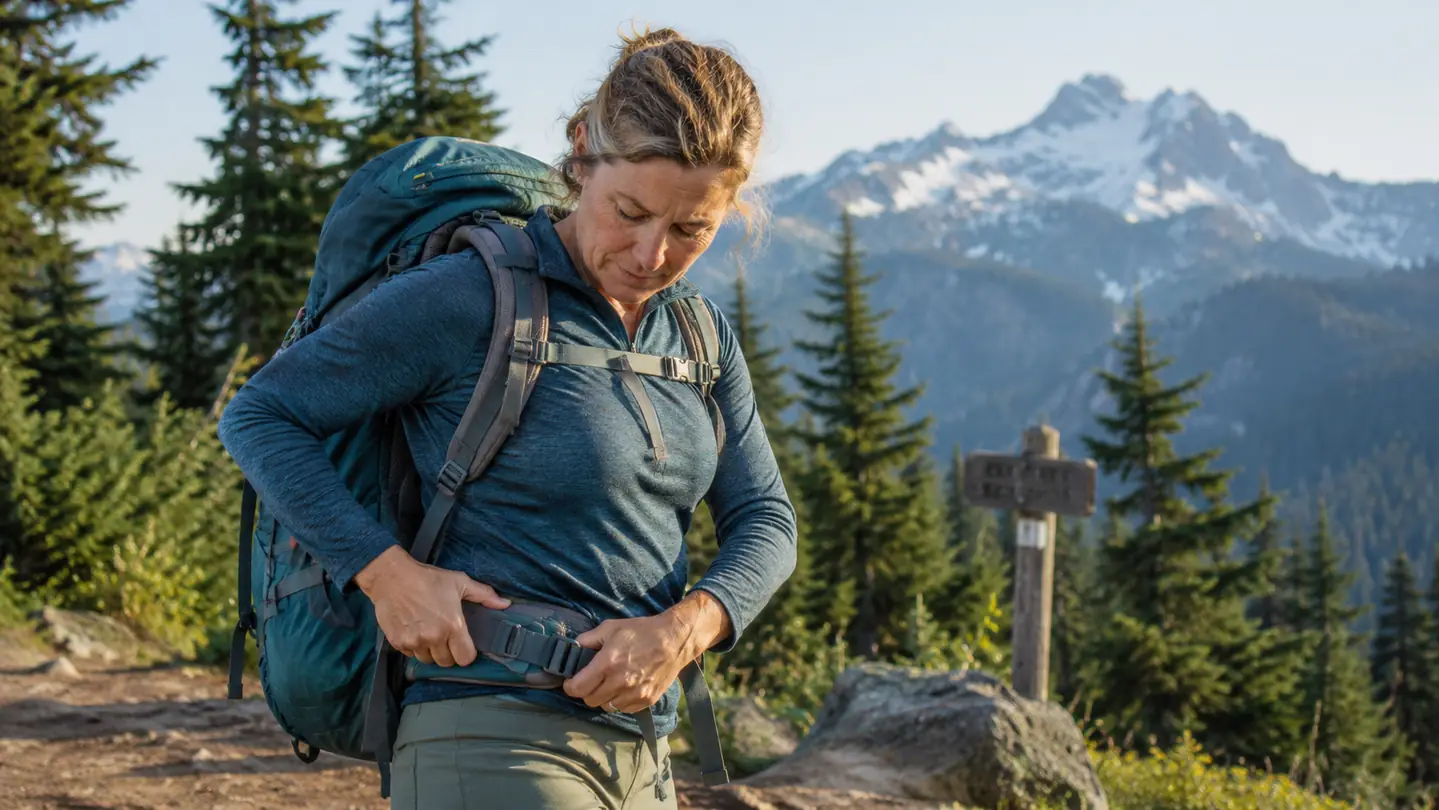
I have a confession: I bought the Maelstrom 40L hiking backpack for a reason that had nothing to do with specs. My old pack's hip belt had started digging into the bruise I still carry from college volleyball, and I was tired of stopping every mile to re-tighten it. I wanted something that would sit right, transfer weight to my hips, and stop making my left knee negotiate with gravity on every descent. So I ordered the Maelstrom, loaded it with the same gear I always carry, and then spent the better part of a season testing it on the trails I know best.
The Quick Verdict
The Maelstrom 40L is the rare pack that does day hikes and light overnights equally well. The suspension carries weight better than packs twice the price, and the fit is forgiving enough for a 54-year-old body that no longer bounces back the way it used to.
Amazon Check Today's Price →A 40L pack that finally carries the load where it belongs
After months of trail use, the Maelstrom 40L is still the pack I reach for first. Check today's price on Amazon and see if it fits your next trip.
Amazon Check Today's Price on Amazon →How I've Used It
I am Tessa Marlow, a 54-year-old retired middle-school science teacher who lives in Bellingham, Washington. My hiking week looks like this: two or three solo hikes on the Chuckanut trails near home, a longer weekend trip into the North Cascades with my sister Jen when she can get away, and a couple of multi-day trips a year when I travel. That means the Maelstrom 40L has carried everything from a light day pack load of water, snacks, and a rain shell to a full three-day load with a tent, sleeping bag, stove, and food.
I used the pack on 23 hikes over about six months, including an overnight in the Enchantments permit zone, a rainy loop near Baker Lake, and a long day hike up to Cascade Pass. Total trail time was somewhere north of 180 miles. I weighed every load before I left, kept a little notebook of how the pack felt at mile 2 versus mile 8, and I did not change my gear setup halfway through just to make the pack look good. The pack had to work with what I already owned.
My left knee is the reason I care about suspension at all. I tore cartilage playing volleyball in college, and downhill miles have been my weak spot ever since. A pack that lets the hip belt carry the weight instead of the shoulders makes a measurable difference in how my knee feels the next day. That is the lens I brought to this review, and it is the reason the load transfer on the Maelstrom impressed me as much as it did.
The first real test came in mid-June on a 9-mile out-and-back on the Ridgetop Trail above Bellingham. I loaded the pack with 18 pounds, about my usual day-hike weight, and I made my first mistake before I left the parking lot. I put the heaviest items at the bottom of the main compartment, the way I had always packed my old bag. By mile 2, the load was riding low and the hip belt was pressing into my hip flexors. I stopped at the first overlook, unpacked everything onto a log, and repacked with the heaviest items up top, pressed against the frame. The difference was immediate. This pack rewards weight packed high and close to your back, and it punishes the old bottom-heavy habit. I have packed it the right way ever since.
What the Maelstrom 40L Gets Right
The first thing I noticed was the frame. The Maelstrom uses an internal aluminum frame with a mesh back panel that keeps the pack off your spine. On a warm afternoon on the Chuckanut Ridge Trail, that air gap meant my shirt was damp instead of soaked. More importantly, the frame transfers load to the hip belt in a way that feels immediate. When I tightened the belt, I could feel the weight settle onto my hips within a few steps. That is not true of every pack in this price range.
The hip belt itself is stiff without being punishing. It has enough padding to spread the load across my hip bones, and the buckle is easy to operate with one hand, even with gloves on. The shoulder straps are curved in a way that clears my collarbone, and the sternum strap sits at a height I can adjust without taking the pack off. Little things, but they add up over a 10-mile day.
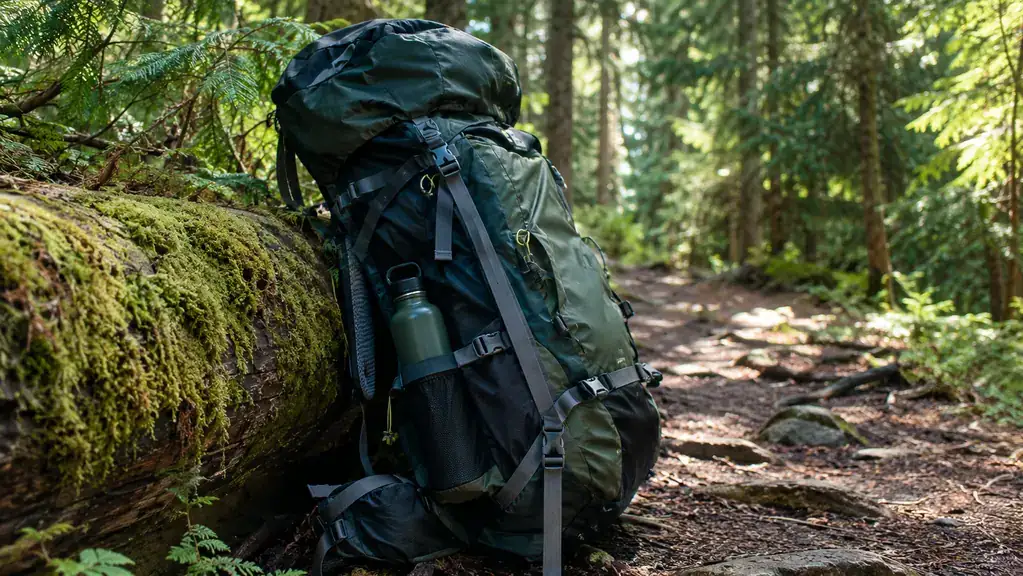
Storage is where the Maelstrom really shines for the way I hike. The main compartment opens wide like a suitcase, which means I can actually see what is at the bottom instead of digging blind. There is a separate bottom compartment for a sleeping bag, with a zippered divider I can remove when I am carrying a big load of day-hike gear instead. The front pocket is the kind of deep, stretchy shove-it pocket that swallows a rain shell, a map, and a hat without complaint. Two stretch side pockets hold water bottles firmly enough that I have never lost one, even when I was scrambling over rocks.
The frame also does something I did not expect. It flexes slightly when I lean forward to step over a log, then springs back when I stand upright. My old pack was rigid, and that rigidity made it feel like it was fighting me on uneven ground. The Maelstrom moves with me instead of against me, which is a hard thing to capture in a spec sheet but an easy thing to feel by mile 6. The load lifters deserve a mention too. They run from the top of the shoulder straps back to the frame, and they are what pull the top of the pack in toward your body. On my second trip I left them loose and the pack leaned away from me on every step, throwing weight onto my shoulders. Thirty seconds of tightening fixed it, and now I check them before every hike.
How It Performed Over Months of Use
The most useful test was a rainy October loop near Baker Lake. It rained for most of the day, and the included rain cover went on and off four times as the weather shifted. The cover fits snugly over the whole pack, has a little loop for the sternum strap, and stayed put in wind that was gusting hard enough to push me around on the exposed sections. My gear stayed dry, including the down jacket I had foolishly packed on the outside pocket of my old pack on previous trips.
The zippers are the detail I keep coming back to. They are chunky, waterproofed, and they have never snagged, even when I overstuffed the main compartment so full I had to sit on the pack to close it. That is the test that kills most budget zippers, and the Maelstrom passed it every single time. The stitching on the stress points, where the shoulder straps meet the pack body, shows no fraying after six months of regular abuse.
I did notice the fabric shows wear faster than a premium pack. After a few scrapes against granite on a scramble near the Enchantments, the outer fabric has a few scuffed patches. Nothing has torn through, and the pack is nowhere near failing, but it is worth knowing that this is a pack built to be replaced after a few hard seasons, not an heirloom piece. For the price, I consider that a fair trade.
The one functional complaint I have is the lack of a proper hip belt pocket. My old pack had a small zippered pocket on the right hip belt where I kept my phone and a lip balm. The Maelstrom has a tiny pocket on one side, but it is too small for a modern phone. I ended up keeping my phone in the top lid pocket, which is fine, but it is a small design miss on an otherwise well-thought-out pack.
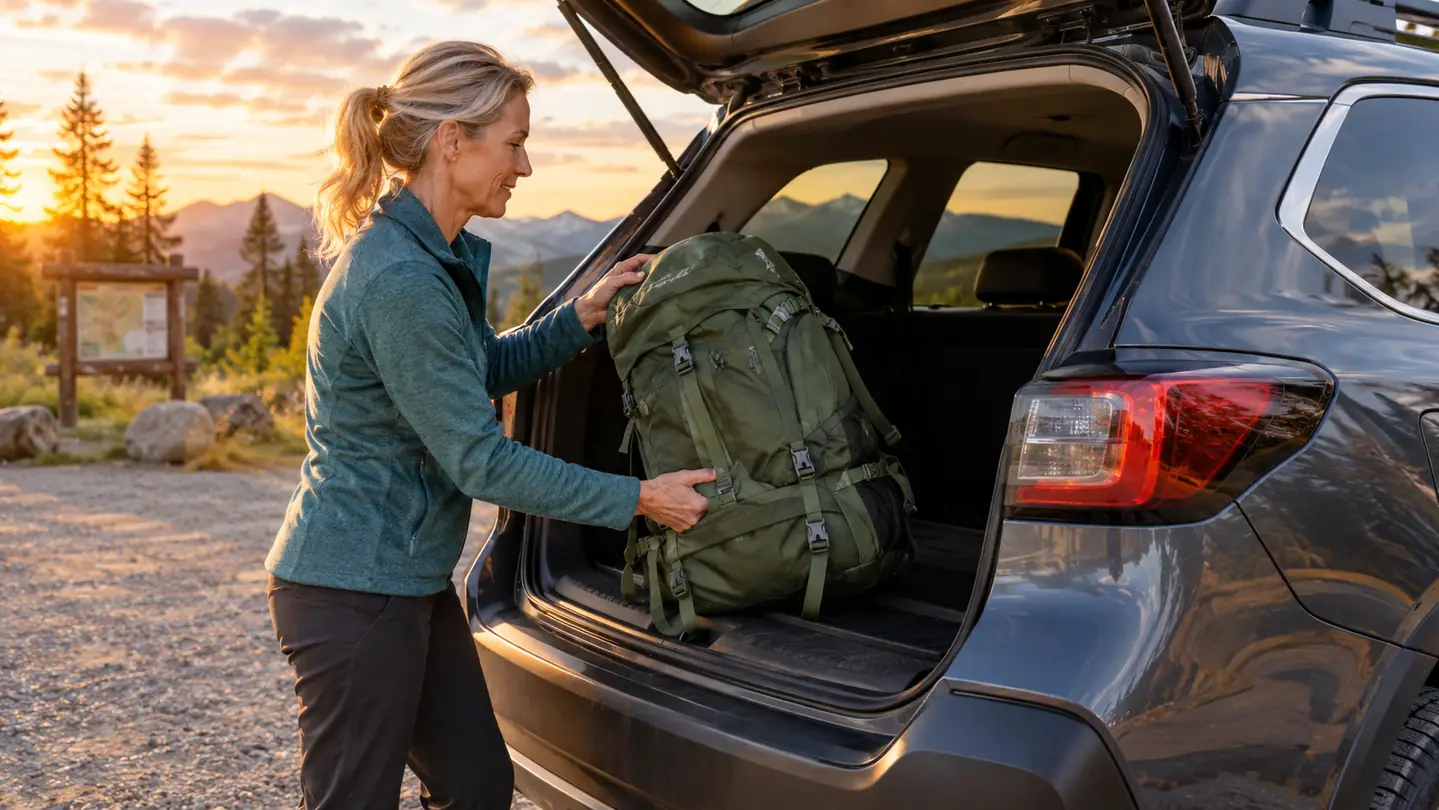
The hardest single day was a 14-mile round trip to Cascade Pass in mid-September with my sister Jen. We carried about 24 pounds each, and I made one mistake at the trailhead: I cinched the hip belt too tight, trying to lock the load down for the climb. By mile 5, a hot spot was forming on my right hip bone. I stopped, loosened the belt half an inch, and let the pack ride a touch lower. The hot spot never turned into a blister, and the pack carried the extra weight without complaint for the rest of the day. That kind of forgiveness, the ability to fix a fit issue in thirty seconds on the trail, is what separates a pack I trust from a pack I tolerate.
After 180 miles of trails, the Maelstrom 40L still carries a full load without sagging, and the hip belt still does its job on every step.
What I Liked
- Load transfer to the hip belt is excellent, which matters for anyone with knee or back trouble
- Mesh back panel keeps the pack off your spine and vents heat on warm climbs
- Main compartment opens wide, so you can see and reach everything without digging blind
- Included rain cover fits snugly and stayed put in gusty wind
- Chunky zippers never snagged, even when the pack was overstuffed
Where It Falls Short
- Hip belt pocket is too small for a modern phone
- Sternum strap can whistle in wind until you route the webbing through the keeper
- Outer fabric scuffs faster than premium packs after granite scrapes
- Single torso size with adjustable harness tops out around 20 inches, so very tall hikers may not fit
- Rain cover is stored at the bottom of the pack, awkward to reach in a downpour
The Tradeoffs You Should Know About
Let me be honest about the things that are not perfect. The first is the sternum strap whistle. On a windy day, the webbing on the sternum strap can vibrate and make a faint whistling sound. It took me two hikes to figure out what the noise was. It is not loud enough to be a real problem, but it is the kind of detail that would drive a certain kind of hiker crazy. A small piece of tape or a different strap route solves it.
The whistle finally got my full attention on a gusty day at Artist Point in October. I was alone, and the sound was so faint and intermittent that I spent ten minutes checking my boot laces, my trekking pole baskets, and every zipper before I realized it was the sternum strap webbing vibrating in the wind. I tried three fixes before one worked. Tightening the strap all the way made it worse. Loosening it did nothing. Finally I routed the excess webbing back through the keeper loop so it lay flat against the strap, and the whistle stopped completely. Ten seconds of fiddling, and the problem was gone.
The second tradeoff is the rain cover. It is a good cover, but it lives in a tiny pocket at the bottom of the pack, which means you have to unpack the bottom compartment to get to it. I learned to keep the cover in the top lid pocket instead, which costs me a little space but saves me from emptying the pack in a downpour.
The third is fit range. The Maelstrom 40L comes in one torso size, with an adjustable harness that covers roughly 16 to 20 inches. That covers most adults, including me at 5-foot-6, but if you are very tall or very short, you may not get the fit you need. My sister Jen, who is 5-foot-10, borrowed the pack for a day and found the torso adjustment at its limit. It worked, but she said she would want a longer frame for a multi-day trip.
How It Compares to Packs I've Owned
I have owned three hiking backpacks in my life. The first was a cheap external-frame pack from the 1980s that weighed four pounds empty and transferred every pebble straight to my spine. The second was a well-known name-brand pack that cost three times as much as the Maelstrom and carried beautifully, but the hip belt wore out after two seasons and the replacement belt cost almost as much as this whole pack. The Maelstrom sits between them in price and, honestly, closer to the expensive pack in performance.
The thing the Maelstrom does better than my old expensive pack is breathe. The mesh back panel keeps air moving, and on a hot day that is worth a lot. The thing the expensive pack did better was the hip belt pocket and a slightly more refined harness adjustment. Neither difference changed my day on the trail as much as I expected.
Who This Is For
The Maelstrom 40L is for the day hiker who wants one pack that can also handle the occasional overnight. It is for the weekend backpacker who does not want to own three different packs for three different trip lengths. It is for the person who, like me, cares more about how the weight feels at mile 8 than about the logo on the side. If you are a hiker who carries 15 to 30 pounds, this pack is in its element.
Who Should Skip It
Skip the Maelstrom 40L if you are a serious multi-week thru-hiker who needs a pack that will survive 1,000 miles a year. Skip it if you are very tall or very short and need a precise torso fit. Skip it if you need a hip belt pocket for your phone, because the one on this pack is too small for anything bigger than a pack of tissues. And skip it if you want a pack that will look pristine after years of granite scrapes. This is a working pack, not a showpiece.
Still deciding? The Maelstrom 40L is the pack I reach for first
After six months and 180 miles of trail use, the Maelstrom 40L has earned its place in my gear closet. Check today's price on Amazon and see if it fits your next trip.
Amazon Check Today's Price on Amazon →