
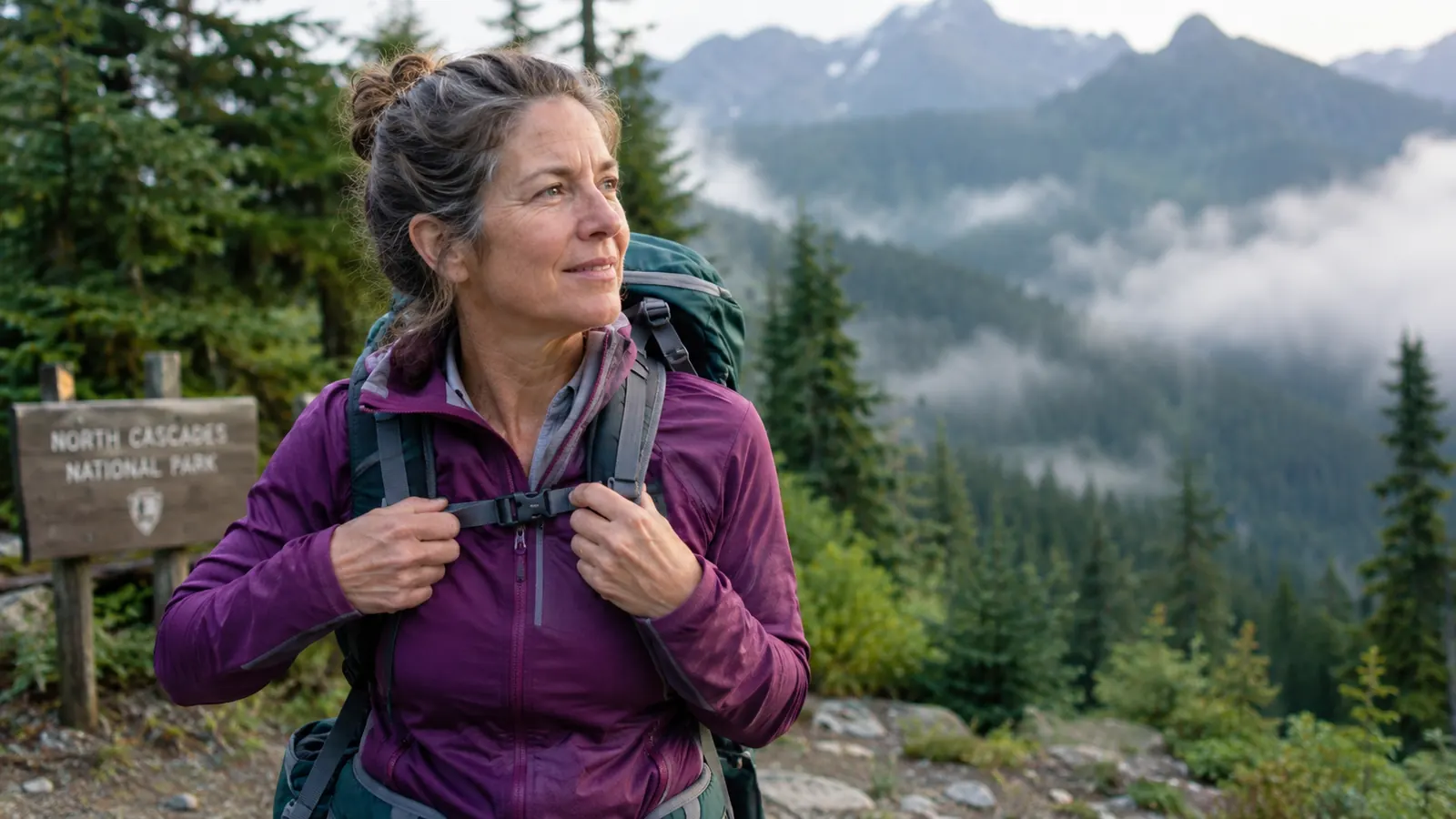
Somewhere between a small daypack and a 65-liter expedition bag, there is a size that does almost everything. For me, that size is 40 liters. It is the pack I grab for a long day on the Chuckanut trails near Bellingham, and it is the one I reach for when my sister Jen and I finally make it up to the North Cascades for an overnight.
I have been hiking with the Maelstrom 40L for two seasons now, and it has become the pack I recommend when friends ask what to buy first. Not because it is the fanciest pack on the shelf. Because it gets the basics right, and it does it at a weight that does not punish you on the way down. Here are the ten reasons I keep choosing it.
The 40L pack that goes on every trail with me
Light enough for a day hike, roomy enough for an overnight, and it comes with a rain cover so you are not caught out when the Cascades do their thing.
Amazon Check Today's Price on Amazon →The 10 Reasons
Forty liters hits the sweet spot between day hike and overnight
A 20-liter pack forces you to leave your puffy jacket behind. A 60-liter pack invites you to carry things you will never unpack. Forty liters sits in the middle: room for food, water, an extra layer, a first-aid kit, and a paperback for camp. When I pack the Maelstrom, I do not have to play the what-do-I-leave-behind game. I just pick my layers and go. I learned this the slow way, after a season of carrying too much and a season of carrying too little.

The rain cover is already in the pack
The Pacific Northwest does not ask permission before it rains. The Maelstrom comes with a rain cover that stows in its own pocket, so I never have to remember a separate piece of gear. When the sky opens up halfway to the trailhead, I pull it out in about thirty seconds and my down jacket stays dry. It is the kind of detail you do not appreciate until the day you need it. That little cover has saved more than one trip.
Lightweight means you feel the trail, not the pack
This is the part I care about most. I have an old left-knee injury from college volleyball, so every extra pound on my back is a pound my knee pays for on the descent. The Maelstrom keeps its base weight reasonable, which means I spend my energy on the switchbacks instead of hauling the pack itself. I have learned to read a pack's weight the way I used to read a lab report: the numbers tell you what the marketing will not. On a six-mile loop, that difference adds up fast.
The hip belt does the heavy lifting
A pack that rides on your shoulders is a pack that hurts by mile three. The Maelstrom's hip belt does what a hip belt is supposed to do: it takes the weight off your shoulders and puts it on your hips, where your skeleton is built to carry it. With my knee, that transfer is the difference between finishing a loop and calling it quits at two miles. I would not trade that for any extra pocket.
Compression straps keep the load close to your back
A load that swings away from your body turns every step into a small tug-of-war. Compression straps pull the contents snug against your back, which keeps your center of gravity where it belongs. On uneven trail, that stability is what keeps you from feeling like a sailboat in a gust. I notice it most on the rocky sections of the North Cascades trails, where a shifting load can throw off your footing.
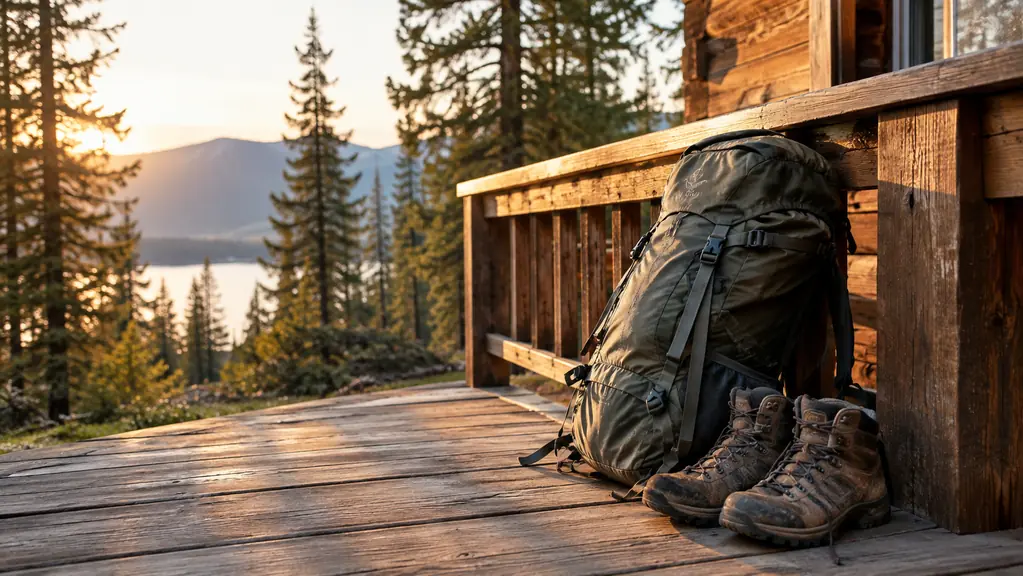
It is organized without being fussy
I am a former science teacher, so I like a place for everything. The Maelstrom has the pockets a hiker actually uses: a spot for a water bottle, a place for small things you need without taking the pack off, and a main compartment that swallows a weekend's worth of food. Nothing about the layout makes me dig for my keys at the end of the day. That matters more than it sounds like after ten miles.
One pack for day hikes, overnights, and travel
I do not want a closet full of bags. The Maelstrom handles a long day on Chuckanut Mountain, a two-night trip in the Cascades, and the occasional flight to visit family, all without looking out of place. It is the pack I keep on the front seat of my Subaru Outback, ready to go whenever the weather cooperates. One bag that does three jobs is worth more than three bags that each do one.
It fits in the car and goes on without a fight
A 65-liter pack takes over the back seat and turns the trailhead into a wrestling match. The Maelstrom is compact enough that I can swing it on without help, which matters when I am hiking alone on a weekday. I have watched people wrestle bigger packs for five minutes; I would rather be hiking. No awkward dance in the parking lot, no asking a stranger to hold the straps.
Forty liters forces you to pack like a hiker
The best thing a 40-liter pack does is set a limit. When I carried a bigger pack, I filled it with things I never touched. With the Maelstrom, I choose my layers carefully and leave the extras at home. I have never once been stuck on the trail wishing I had brought more. Every time I come home with a pack that is not full, I am glad I chose the smaller size. The limit is the freedom.
Thousands of hikers have already done the homework
The Maelstrom has more than 3,500 reviews and a 4.5-star average. That is a lot of people who could have returned it and did not. Reviews are not proof, but they are signal: when a pack keeps a rating like that over thousands of buyers, it means the basics are right. The rating is not why I bought it, but it is why I tell people to look at it. I would rather trust that than a marketing photo.
What I'd Skip
Honest part: this pack is not for everyone. If you are planning a two-week expedition with a full mountaineering kit, you need a bigger pack with a beefier frame. If you are a trail runner who wants to carry nothing but a phone and a key, 40 liters is more bag than you will want. And if you already own a pack you love, you do not need this one. The Maelstrom is for the hiker who wants one pack that does most things well.
More than 3,500 hikers rate the Maelstrom 40L at 4.5 stars, and after two seasons of my own, I understand why.
One pack for almost every hike you will take
The Maelstrom 40L is light, it comes with a rain cover, and it has earned a 4.5-star rating from more than 3,500 hikers. If you are ready for a pack that gets the basics right, this is a good place to start.
Amazon Check Today's Price on Amazon →