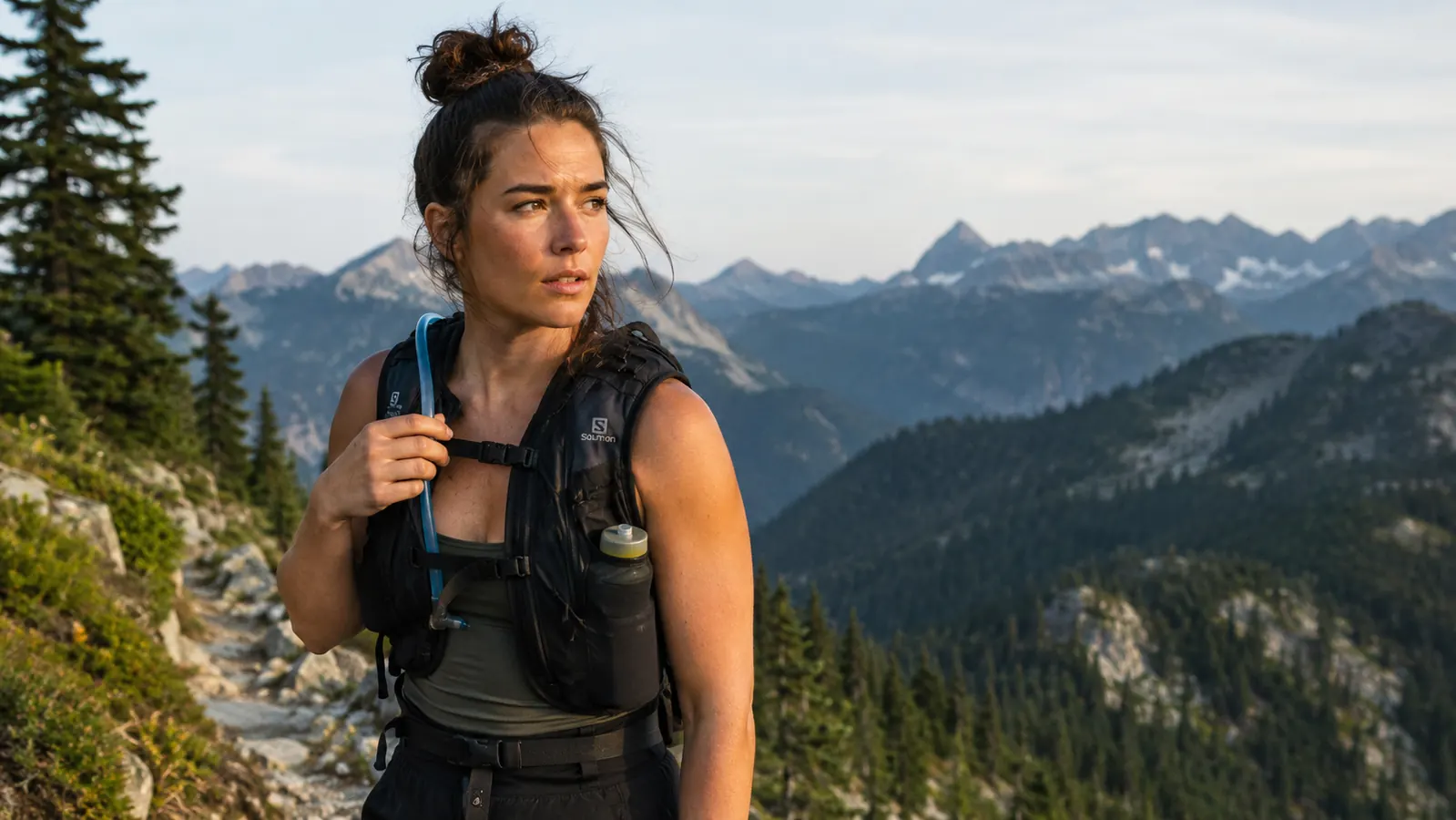
The first time I ran out of water on a hike, I was young enough to think it was a character flaw. By the time I hit my forties, I knew better: it was a planning problem. On a long day in the North Cascades, dehydration does not announce itself politely. It shows up as a dull headache, a slower pace, a decision that takes twice as long as it should. The fix is not willpower. The fix is a system, and the system starts with a hydration pack that makes drinking water the easiest thing you do all day. The N NEVO RHINO 18L hydration pack is the pack I have used for two seasons, and it is the pack this guide is built around.
I am Tessa Marlow, a retired middle-school science teacher who hikes the Chuckanut trails and the North Cascades most weeks. My hiking partner is my sister Jen, who joins me on weekends; on weekdays I hike alone. I have an old left-knee injury from college volleyball, so I care about how a pack carries weight, not just how much it holds. This guide is the exact routine I use to stay hydrated on hikes from two hours to a full day, with the Nevo Rhino doing the heavy lifting.
Start every hike with 3 liters of water on your back
The Nevo Rhino 18L hydration pack comes with a 3L bladder, a magnetic bite valve, and enough room for a day of layers and food. It is the pack I reach for every time I head into the mountains.
Amazon Check Today's Price on Amazon →Step 1: Fill the bladder the night before, and freeze it flat
The single best habit I have for staying hydrated is filling the bladder the night before a hike. Not the morning of, when the coffee is half drunk and the car is already packed. The night before, when I am calm and the sink is right there. Fill it, squeeze the air out, and lay it flat in the fridge. In summer, I freeze it flat instead, which gives me a block of ice that melts slowly through the morning and keeps the water cold for hours.
The Nevo Rhino bladder has a wide opening, which makes filling and cleaning genuinely easy. Wide openings are not a glamorous feature, but they are the difference between a bladder you actually clean and one you avoid cleaning. I rinse mine with warm water and a little baking soda after every trip, hang it to dry with the cap open, and it has stayed fresh through two seasons.
One caution from experience: do not overfill. The bladder is 3 liters, and 3 liters is the right amount for a full day in moderate weather. If you fill it to the absolute brim, the pack bulges and the bite valve dribbles. Leave a little air, seal it, and let the pack do its job.
Last August, on a hike up to Yellow Aster Butte, I froze the bladder flat and left it in the fridge overnight. At the trailhead at 8:40 AM it was still a solid block, and by the time Jen and I stopped for lunch at 12:30, the water was still cold enough to be worth drinking. On the same trip the year before, with a room-temperature bladder, the water tasted warm by mid-morning and I drank less because of it. That is the quiet way dehydration sneaks up on you: you skip a sip because the water is unappealing, and two hours later you are behind. I also set the filter bottle next to the bladder the night before so I cannot forget it at the door.
Step 2: Set the bite valve so you can drink without stopping
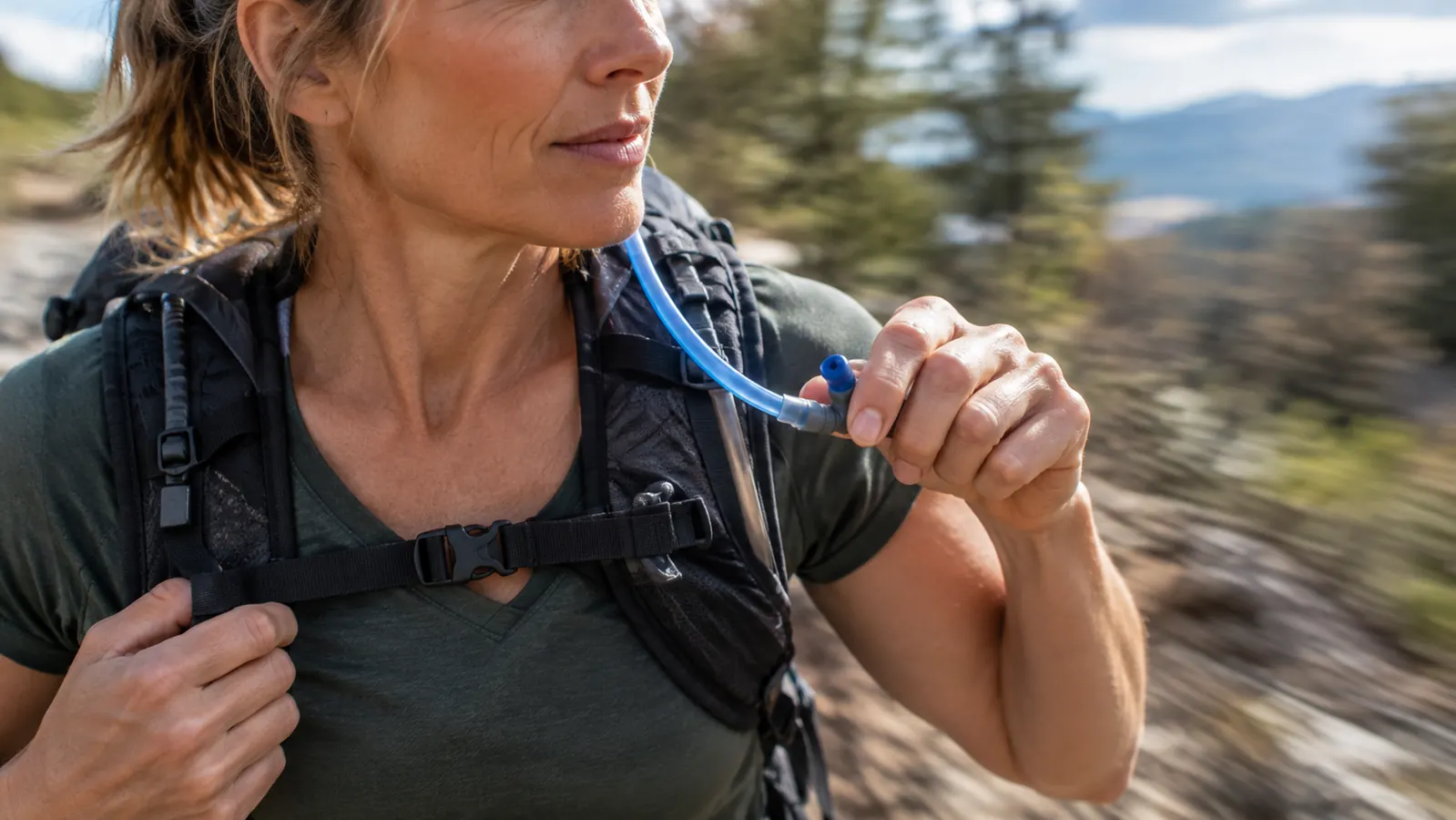
The whole point of a hydration pack is that you do not have to stop walking to drink. That only works if the bite valve is set up correctly before you leave the trailhead. The Nevo Rhino uses a magnetic bite valve that clips to the sternum strap, which means the tube stays put instead of swinging around while you walk. I clip it, take a practice sip, and adjust the tube length so it sits right at chest level.
To drink, you bite down gently and pull. If the valve leaks, it usually means you did not close it fully after the last sip, or the hose is kinked somewhere. I run the hose over my shoulder and under the sternum strap clip, which keeps it out of the way and gives it a clean line with no kinks. The magnetic clip on the Nevo Rhino is one of those small details I did not expect to care about, and now I would not want to hike without it.
A note on temperature: in cold weather, the bite valve can freeze if it is left wet. I blow the water back into the bladder after the last sip, which clears the tube and keeps the valve from freezing. It is a two-second habit that saves a lot of frustration on a cold morning.
Step 3: Drink on a schedule, not just when you are thirsty
Thirst is a lagging indicator. By the time you feel thirsty, you are already a little behind. The system I use is simple: I take a sip every time I reach a trail junction, a stream crossing, or a viewpoint. Those are natural break points, and they happen often enough that I am drinking steadily all day without thinking about it.
For a rough target, I aim for about half a liter per hour in moderate weather, and more on hot days or steep climbs. The Nevo Rhino's 3L bladder covers that easily for a full day. If I am hiking with Jen, we use the same rhythm: every time we stop to look at the map, we both drink. It turns hydration into a habit instead of a chore.
The day I learned this lesson the hard way was a September hike to Lake Ann. I skipped my junction sips because I was trying to make the most of the daylight, and by the time I reached the lake I had the start of a headache and my pace on the descent had slowed by a noticeable margin. Jen timed the last mile at almost twenty minutes, a full five minutes slower than our usual pace. The only thing that had changed was that I had gone almost two hours without drinking. I finished the day fine, but I have never skipped the schedule since.
The other half of the schedule is paying attention to your urine color. It is not a glamorous topic, but it is the most honest signal your body gives you. Pale yellow means you are doing fine. Dark yellow means you are behind and should drink more at the next break. I check at every rest stop, and it has caught me slipping more than once on hot afternoons.
Step 4: Carry a backup filter bottle for refills on long days
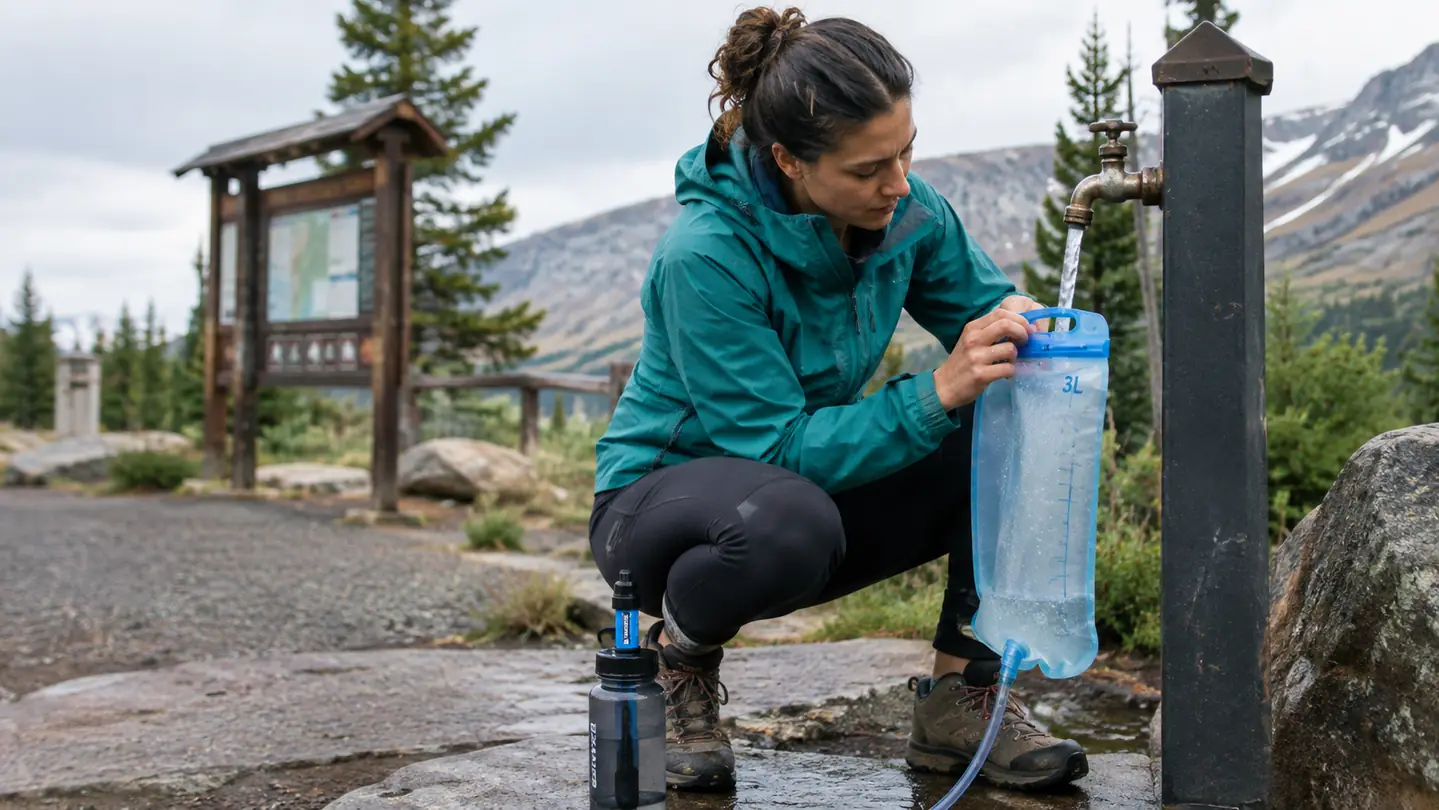
Three liters is enough for most day hikes, but not for a long summer day on a hot trail. For those days, I carry a small filter bottle in the side pocket of the Nevo Rhino. The pack has two stretchy side pockets, and a 600ml filter bottle fits easily in one of them without crowding the bladder. When the bladder runs low, I refill it from a stream or lake, filter the water into the bottle, and pour it into the bladder through the wide opening.
This is the part of the system that most people skip, and it is the part that makes long hikes feel safe. Knowing I can refill from any water source means I never have to ration water. I drink what I need, and when the bladder gets low, I top it up. The filter bottle weighs almost nothing, and the N NEVO RHINO carries it without complaint.
On a 14-mile loop near Sauk Mountain last summer, I refilled the bladder twice. The first refill took about four minutes: filter 600 milliliters into the bottle, pour it through the wide opening, repeat. The second refill I did at a stream crossing, kneeling on a flat rock while Jen held the pack. It is not a fast process, but it is a reliable one, and it turned what could have been a rationed afternoon into a normal day. I keep a spare filter cartridge in the Subaru so I never discover a clogged filter at the trailhead.
If you hike in areas without reliable water sources, plan your route around known springs and streams before you go. A paper map with water sources marked is worth more than any app when the battery dies. I mark mine the night before, right after I fill the bladder.
Step 5: Treat the pack and bladder gently, and they will last
A hydration pack is a piece of gear that rewards a little care. After every hike, I empty the bladder, rinse it, and hang it to dry with the cap open. I wipe down the inside of the pack if it got sweaty, and I check the hose and bite valve for wear. The Nevo Rhino has held up well through two seasons of regular use, including a few trips where I was not as careful as I should have been.
The pack itself is 18 liters, which is the sweet spot for a day hike. It carries the 3L bladder, a light jacket, food, a first aid kit, and a filter bottle, with room left over. The hip belt transfers weight to my hips, which matters to me because of my old knee injury. A pack that rides low and stable means I am not fighting the load, and that means I am not burning energy I need for the trail.
The knee connection is not abstract for me. I landed on my left knee in a college volleyball match in 1989, and it has been the first thing to complain on a bad carry ever since. On the descent from Oyster Dome, which drops about six hundred feet in under a mile, I notice exactly where the load sits. With the N NEVO RHINO, the hip belt keeps the weight on my hips and off my shoulders, and I come down the steep switchbacks without the pack swaying. That stability is the difference between a hike I repeat and a hike I cross off the list.
One honest trade-off: the Nevo Rhino is not the lightest pack on the market, and the wide bladder opening adds a little bulk. For me, the durability and the ease of cleaning are worth the extra ounces. If you are an ultralight purist counting every gram, this pack is probably not for you. If you want a pack that does everything well and lasts, it is a strong choice.
What Else Helps
A hydration pack is the center of the system, but it is not the whole system. I always carry a small bottle of electrolyte powder for long, sweaty days, because water alone is not enough when you are losing salt. I also keep a headlamp in the pack even on short hikes, because trails take longer than you expect and daylight runs out faster than you think. And I tell Jen where I am going and when I plan to be back, every single time. Hydration is important, but the habits around it, planning, checking, and telling someone your plan, are what keep you safe on the trail. The N NEVO RHINO has a small pocket on the hip belt, and I keep a tube of sunscreen and a lip balm in it, because sun at elevation is relentless even when the trailhead is cool.
By the time you feel thirsty, you are already a little behind. The sip-at-every-break habit is what keeps you ahead.
Make hydration the easy part of your next hike
The N NEVO RHINO 18L hydration pack has carried me through two seasons of day hikes in the North Cascades. It holds 3 liters, rides stable, and makes drinking water the easiest thing I do on the trail.
Amazon Check Today's Price on Amazon →